
Here are the 10 best business laptops for 2026 you should consider. The list includes the Dell Inspiron 15 3530 Touchscreen with 32GB RAM and 1TB SSD, the Lenovo V15 with 16GB/512GB in Windows 11 Pro, and the Lenovo V15 bundles with a mouse. You’ll also find the ASUS Vivobook 2025, the ASUS VivoBook Go, and the HP 15.6″ FHD Business Laptop, plus other solid, portable options. Each offers good battery life, sturdy builds, and solid connectivity; more details await.




More Details on Our Top Picks
Dell Inspiron 15 3530 Touchscreen Laptop w/ 32GB RAM 1TB SSD
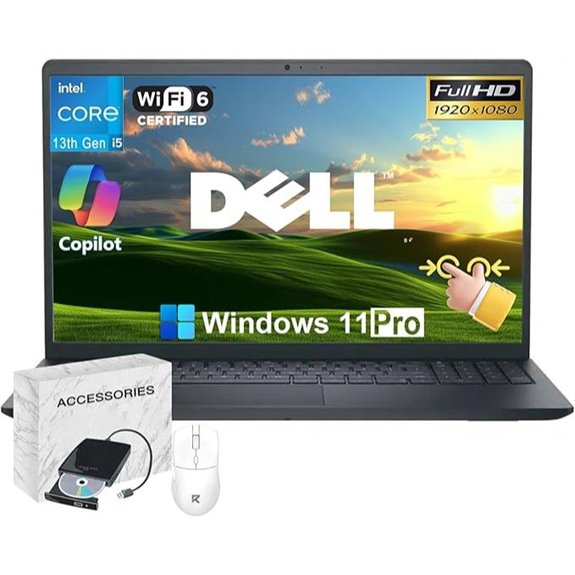
The Dell Inspiron 15 3530 with 32GB RAM and a 1TB SSD is a strong fit for busy students and professionals who multitask often. You get a 15.6-inch Full HD touchscreen, anti-glare display, and solid performance from a 10-core i5-1334U with Turbo Boost. It runs Windows 11 Pro, weighs about 3.65 lbs, and measures 14.11 by 9.27 by 7.5 inches, making it portable enough for daily use. With 32GB RAM and 1TB NVMe storage, multitasking and large files move quickly. Connectivity includes Wi‑Fi 6, Bluetooth 5.3, USB-C, USB-A, HDMI, and more. It’s a practical, productivity-focused choice.
- Category:Laptop
- Screen Size:15.6″
- Operating System:Windows 11 Pro
- RAM:32GB
- Storage:1TB SSD
- Weight:3.65 lbs
- Additional Feature:Fast charging 80% in 60 minutes
- Additional Feature:32GB RAM for multitasking
- Additional Feature:Touchscreen anti-glare display
ASUS Vivobook 2025 Ultra Portable Laptop i3-1315U 1TB+512GB
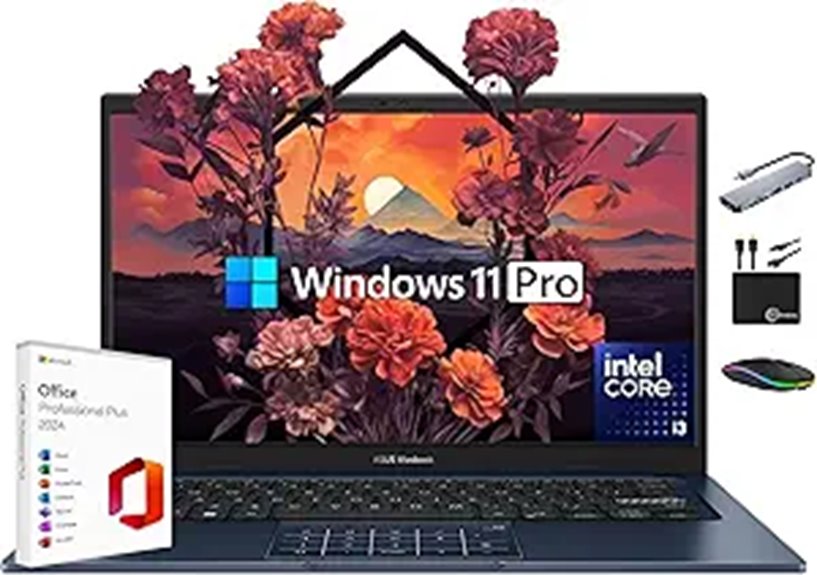
With 16GB RAM, a 14″ FHD display, and a compact 3.09 lb body, the ASUS Vivobook 2025 Ultra Portable is a solid pick for road-warrior professionals who need a capable Windows 11 Pro machine without weighing down their bag. This model runs on an i3-1315U with up to 4.5GHz, includes 1TB storage (512GB SSD plus 500GB external drive), and 16GB RAM, plus a 42Wh battery. It features a quiet blue chassis, 3.5mm jack, HDMI, USB-C, and several USB-A ports, plus ASUSTek Office 2024 and privacy tools. It’s lightweight, practical, and ready for everyday business tasks.
- Category:Laptop
- Screen Size:14″
- Operating System:Windows 11 Pro
- RAM:16GB
- Storage:1TB + 512GB external
- Weight:3.09 lbs
- Additional Feature:2x USB 3.2 Gen1 ports
- Additional Feature:1TB + external 512GB storage
- Additional Feature:Lifetime Office 2024 bundle
ASUS VivoBook Go 15.6″ Ryzen 3 Laptop (8GB/128GB)
This ASUS VivoBook Go 15.6″ Ryzen 3 laptop is a strong pick for budget-conscious business users who need solid daily performance, especially with 8GB of RAM and a 128GB SSD. You get a 15.6-inch FHD screen, 1920×1080 resolution, and a NanoEdge display with 60Hz. It runs on an AMD Ryzen 3 7320U quad-core processor with Windows 11 Home. Weighing about 3.59 pounds, it includes a 720p camera, ErgoSense keyboard, USB-C, USB-A, HDMI, and a 3.5mm jack. It supports Wi‑Fi 5, Bluetooth 5.1, and a 45W adapter for everyday tasks.
- Category:Laptop
- Screen Size:15.6″
- Operating System:Windows 11 Home
- RAM:8GB
- Storage:128GB SSD
- Weight:3.59 lbs
- Additional Feature:180° lay-flat hinge
- Additional Feature:45% NTSC color gamut
- Additional Feature:8GB RAM, Ryzen 3 7320U
15.6″ FHD Laptop – 12GB RAM 256GB SSD Fingerprint
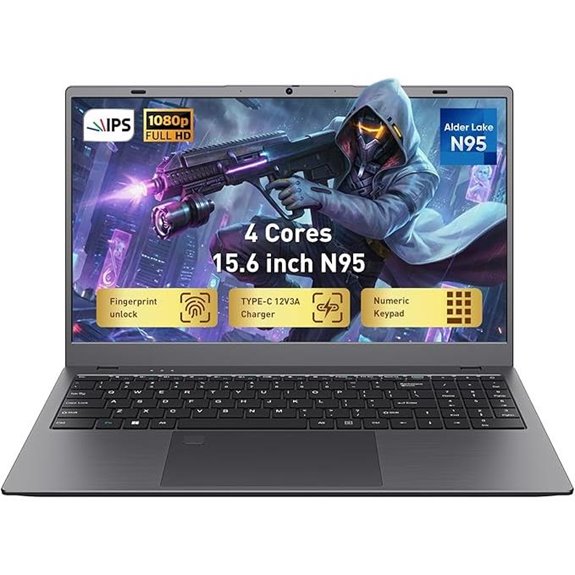
For professionals who need a portable workhorse, this 15.6″ FHD laptop fits the bill with 12GB RAM and a 256GB SSD plus a fingerprint reader for quick, secure access. You get a 15.6″ FHD IPS screen with 1920×1080, a quad-core Intel N95 up to 3.4GHz, and Windows 11 Pro. It weighs about 3.53 pounds and measures 14 by 9.1 by 0.75 inches. Connectivity includes WiFi 5, Bluetooth 5.0, dual USB-C with Power Delivery, HDMI, and USB 3.2 ports. It supports up to three external 4K displays and has a privacy webcam shutter.adequate storage and security.
- Category:Laptop
- Screen Size:15.6″
- Operating System:Windows 11 Pro
- RAM:12GB
- Storage:256GB SSD
- Weight:3.53 lbs
- Additional Feature:Fingerprint unlock
- Additional Feature:2MP webcam with privacy shutter
- Additional Feature:Expandable storage via microSD
Lenovo V15 15.6″ i7-13620H Laptop Bundle with Mouse
The Lenovo V15 bundle stands out for budget-conscious business buyers who need solid performance without breaking the bank, thanks to the 15.6″ FHD display and a capable Intel Core i7-13620H. You get a 15.6″ anti-glare screen, 40GB RAM, and 1TB NVMe storage, plus Intel UHD graphics for everyday tasks. The bundle includes a Thunderobot ML101 wireless mouse, a USB-C and multiple USB ports, plus HDMI and Ethernet for flexible work setups. It runs Windows 11 Pro, weighs about 6 pounds, and offers Wi‑Fi 6. Expect solid reliability, with a 30-day return option. Overall, practical, value-focused performance for professionals.
- Category:Laptop
- Screen Size:15.6″
- Operating System:Windows 11 Pro
- RAM:40GB
- Storage:1TB SSD
- Weight:6.0 lbs
- Additional Feature:40GB RAM
- Additional Feature:Thunderobot wireless mouse included
- Additional Feature:1TB PCIe NVMe SSD
Dell Inspiron 15 Business Laptop with i5-1334U 16GB 512GB SSD
With a 15.6″ FHD touchscreen and a capable Intel 10-Core i5-1334U, this Dell Inspiron 15 is a solid choice for busy professionals who need reliable multitasking, long battery life, and local storage of 512GB PCIe SSD. It comes with 16GB RAM, Wi-Fi 6, and Windows 11 Pro for work. The 15.6″ anti-glare touch display supports easy navigation, while the device weighs about 3.65 lbs, making it portable for travel. Expect up to 10 hours of battery life, strong everyday performance, and a practical 512GB SSD for files and apps. Overall, it fits most business needs well.
- Category:Laptop
- Screen Size:15.6″
- Operating System:Windows 11 Pro
- RAM:16GB
- Storage:512GB SSD
- Weight:3.65 lbs
- Additional Feature:Copilot AI
- Additional Feature:10-core i5-1334U
- Additional Feature:16GB RAM, 512GB SSD
HP 15.6″ Business Laptop with Io Pro License
If you’re shopping for a compact business laptop with solid storage and modern security features, this HP 15.6″ model fits the bill. You get a 15.6-inch HD touchscreen, 3.75 pounds weight, and a silver finish for easy transport. It runs Intel 12th Gen Core i3-1215U with 16GB RAM and a 1TB PCIe NVMe SSD, plus Windows 11 Pro and a lifetime Microsoft Office LTSC license. The device includes Copilot AI, USB-C, USB-A, HDMI, SD card reader, and Wi‑Fi/Bluetooth. Expect up to 5 hours of mixed use, with fast 0–50% charging in about 45 minutes. Overall practical for work.
- Category:Laptop
- Screen Size:15.6″
- Operating System:Windows 11 Pro
- RAM:16GB
- Storage:1TB SSD
- Weight:3.75 lbs
- Additional Feature:Copilot AI chat
- Additional Feature:30-day return policy
- Additional Feature:1TB NVMe SSD
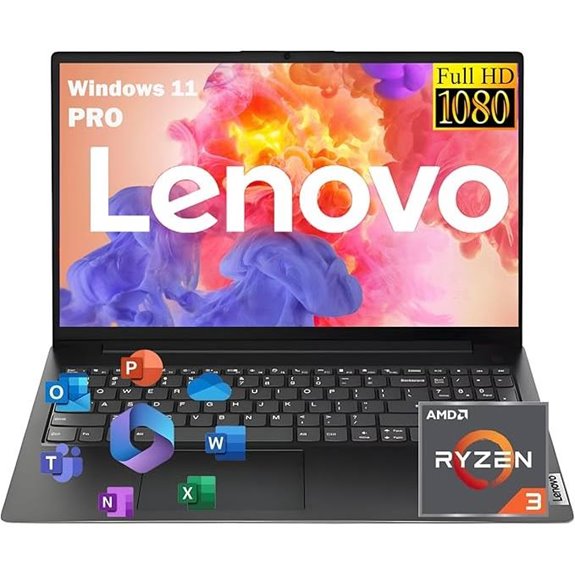
Lenovo V15 Laptop 16GB/512GB Windows 11 Pro
Ideal for students and business users who want solid performance without breaking the bank, the Lenovo V15 laptop focuses on practical power and reliability. You get a 15.6” FHD display, long battery life, Windows 11 Pro, and a built-in Office 365 subscription. It runs on an AMD Ryzen 3 7320U with 4 cores, up to 4.1GHz, and supports up to 16GB RAM and 512GB SSD (expandable to 2TB). Connectivity includes Wi‑Fi 6, Bluetooth 5.2, USB 3.2 Gen 1 ports, USB-C, HDMI, Ethernet, and a headset jack. Dolby Audio enhances sound, weight starts at 3.59 lbs.
- Category:Laptop
- Screen Size:15.6″
- Operating System:Windows 11 Pro
- RAM:16GB
- Storage:512GB SSD
- Weight:3.59 lbs
- Additional Feature:Office 365 subscription included
- Additional Feature:16GB RAM
- Additional Feature:2x USB 3.2 Gen1 ports
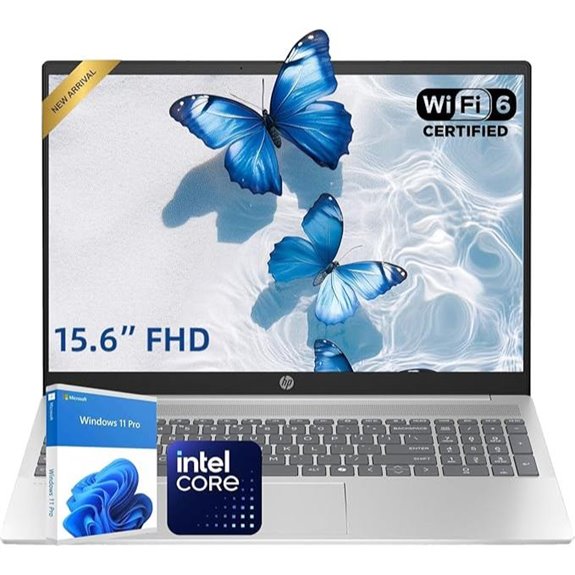
HP 15.6″ FHD Business Laptop with 16GB RAM 256GB SSD
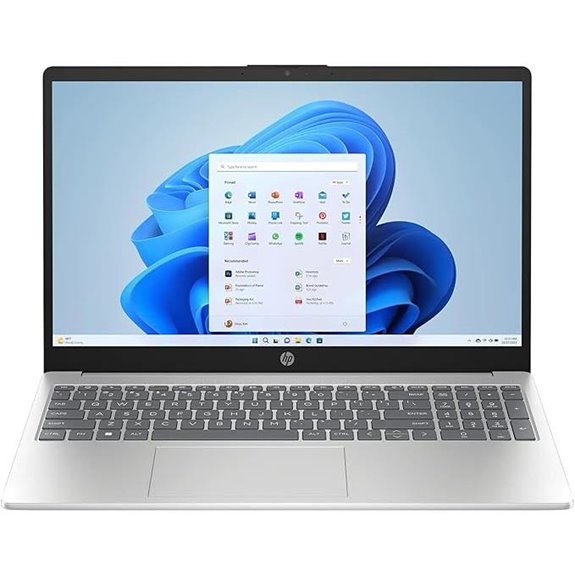
This HP 15.6″ FHD Business Laptop with 16GB RAM and 256GB SSD is a strong pick for professionals who need solid multitasking and security features in a portable package. You get a 15.6-inch FHD anti-glare display, 16GB DDR4 RAM, and a 256GB PCIe NVMe SSD for quick file access. The Intel Celeron N4500 keeps basics smooth, with burst speeds up to 4.4GHz, while Windows 11 Pro with Office helps you stay productive. It offers Wi‑Fi 6, Bluetooth 5.2, USB-C and USB-A ports, plus a privacy webcam. Weighs about 3.8 pounds and includes a 30‑day return window.
- Category:Laptop
- Screen Size:15.6″
- Operating System:Windows 11 Pro
- RAM:16GB
- Storage:256GB SSD
- Weight:3.8 lbs
- Additional Feature:16GB RAM
- Additional Feature:720p webcam with privacy shutter
- Additional Feature:256GB PCIe SSD
Lenovo V15 Laptop (15.6″ Ryzen 7 40GB 1TB)
The Lenovo V15 stands out for professionals who need serious multitasking power in a portable package, thanks to its Ryzen 7 7730U processor and a generous 40GB of RAM paired with a 1TB NVMe SSD. You get a 15.6″ FHD display, anti-glare and TÜV Rheinland Low Blue Light, plus 7.8-hour battery life. It runs Windows 11 Pro, with AI Copilot aid, and has Wi‑Fi 6, Bluetooth 5.2, HDMI, USB-C, and Ethernet. Weighing 3.64 pounds, it’s durable with MIL-SPEC 810H tests and a three-year memory/SSD warranty. For work and study, it’s solid, reliable, and ready for heavy use.
- Category:Laptop
- Screen Size:15.6″
- Operating System:Windows 11 Pro
- RAM:40GB
- Storage:1TB SSD
- Weight:3.64 lbs
- Additional Feature:MIL-SPEC 810H durability
- Additional Feature:7.8 hours average battery life
- Additional Feature:3-year upgrade warranty on memory/SSD
Factors to Consider When Choosing Business Laptop
When you choose a business laptop, you should weigh build quality and durability, performance for multitasking, and battery life, since you’ll rely on it all day. Look for at least a sturdy chassis, a comfortable keyboard, a capable CPU and plenty of RAM for simultaneous apps, and all‑day battery plus fast charging. Also check for solid connectivity, a good selection of ports, and built‑in security features to protect data and support smooth software updates.
Build Quality And Durability
Durability matters as much as performance when you pick a business laptop, so look for a model that can handle daily wear and travel. A MIL-STD MIL-SPEC 810H rating helps ensure it stands up to drops, shocks, and temperature shifts. Lightweight construction matters, ideally 3-4 pounds, so you can carry it through airports and offices without fatigue. Look for a solid chassis that resists flex, since frequent transport can wear parts faster. Screen durability counts too; anti-glare, impact-resistant panels reduce glare and damage from bumps. A robust hinge design extends life by preventing looseness after many open-close cycles. Prioritize a tight build, tested joints, and reliable ports, plus a price that fits your budget and work needs.
Performance for Multitasking
If you want smooth multitasking, choose a laptop with at least 16GB of RAM, preferably DDR4, so you can run multiple apps at once without slowdowns. A multi-core processor helps here, with options like Intel i5 or AMD Ryzen 5, letting several tasks run in parallel without lag. An SSD of 512GB or 1TB speeds up booting, file access, and app launches, which keeps you productive during busy days. Integrated graphics are fine for everyday tasks, but dedicated graphics can help with graphic-heavy work. Expect 6-10 hours of battery life to cover meetings and travel, though heavy multitasking may reduce that. Look for solid build quality, steady thermals, and sensible port choices to support your workflow.
Battery Life And Charging
Battery life and charging often determine how productive you can be away from a desk. Many business laptops offer 5 to 10 hours of use per charge, supporting long workdays without constant plugs. Fast charging helps too, often reaching 50% or more in 30 minutes to an hour, cutting downtime significantly. Power consumption matters; more powerful processors and bright screens drain batteries faster, reducing longevity you’ll notice in real use. Battery technology like lithium-ion affects lifespan and efficiency, so it’s worth checking cycle counts and expected wear. USB-C power delivery adds charging versatility, letting you top up from adapters or hubs on the go. If you value steady all‑day performance, compare real-world battery tests and charging options before you buy.
Connectivity And Ports
When choosing a business laptop, focus on the connectivity and ports you’ll actually use day to day. Look for a mix of USB Type-A and USB Type-C ports to connect mice, docks, and external drives without adapters. HDMI helps you drive meetings on a larger screen, while Ethernet offers solid wired speed in crowded offices. A laptop with multiple USB ports, including USB 3.2 and USB 2.0, keeps older peripherals working without extra hubs. An SD card reader adds flexibility for photographers and videographers transferring files quickly. A headphone/microphone combo jack supports clear calls during video conferences. Also check Wi‑Fi 6 or newer for faster, more reliable wireless connections in busy offices. Prioritize practical, future‑proof options within your budget.
Software And Security Features
A business laptop should come with strong software and security features that protect your data and boost productivity right out of the box. You’ll want lifetime software bundles, like Microsoft Office, to speed up tasks and collaboration. Look for integrated webcam privacy shields and fingerprint unlock to keep sensitive information safe during calls and work. Ensure the device runs the latest OS, such as Windows 11 Pro, for strong security and modern apps support. AI helpers, chat assistants, and productivity tools can streamline workflows and stay connected with teammates. Robust connectivity matters too—Wi‑Fi 6 and Bluetooth ensure fast, secure access for remote work. These features, combined with reasonable pricing and easy updates, support steady, productive business use.
Frequently Asked Questions
What Is the Battery Life in Typical Work Scenarios?
You’ll typically see 8–12 hours of real-world battery life in common work scenarios, with light tasks like email and web browsing on Wi‑Fi lasting toward the higher end, and demanding apps or LTE use reducing that to 4–8 hours. Manufacturers cite 10–14 hours on video playback or mixed workloads, but expect 6–9 hours when you push brightness, multitask, and run background syncing. Look for 60–90Wh cells and efficient processors to improve real-world uptime.
Do These Laptops Support Enterprise Security Features?
Yes, these laptops support enterprise security features. They typically include TPM 2.0 chips, Windows Hello biometrics, and hardware-based encryption, plus multi-factor authentication options, secure boot, and BIOS-level protections. Expect features like fingerprint readers, facial recognition, device attestation, and regular firmware updates. Some models offer optional security docks, BIOS lockdown, and zero-trust readiness. Prices vary, usually from $900 to $2,500, depending on CPU, RAM, storage, and add-ons. Ensure your IT team enables management tools.
Are There Any Standout Durability Specifications?
Yes, standout durability specs include military-grade MIL-STD-810H tests, rugged chassis, and spill-resistant keyboards. Look for aluminum or magnesium builds with drop protection up to 2–3 feet, dust resistance, and reinforced hinges. Many models use MIL-STD-810H, IP53 dust/water resistance, and magnesium alloy bodies around 2.4–4.5 lb, with 14–17 inch keyboards, rugged ports, and tool-free upgrade options. Prices vary from $1,099 to $2,499, depending on screen, CPU, and battery life.
How Upgradeable Are the RAM and Storage Options?
RAM and storage upgradeability varies by model, but many business laptops let you swap RAM on user-replaceable boards and upgrade storage via a second or primary M.2 drive; some newer models only offer soldered RAM, with PCIe NVMe options up to 2–4 TB. Expect 8–16 GB base RAM, 256–512 GB SSD as standard, with options to 1–2 TB. Check service manuals for DIMM slots, screws, and warranty implications before buying.
What Is the Total Cost of Ownership Over Time?
The total cost of ownership includes purchase price, maintenance, energy use, and potential upgrades. Expect initial bills from around $800 to $2,000, depending on specs like CPU, RAM, and storage. Add 3–5 years of energy costs, roughly $20–60 yearly, plus software licenses and service plans. Factor replacement parts, battery life, and repair costs, which vary by model. Plan for a 4–5 year lifespan to spread out costs and maximize value.
Wrapping It Up
When choosing a business laptop, focus on real needs first: performance for daily tasks, durable build, and security features. Look for at least 8–16GB RAM, fast SSD storage, and a reliable CPU like an i5/Ryzen 5 or higher. Consider screen size (14–15.6″), keyboard comfort, and ports for accessories. Check battery life and warranties, and compare total cost of ownership. Prioritize models with updated keyboards, fingerprint or Windows Hello, and easy serviceability for long-term value.


I’m using mostly Microsoft 365 plus Zoom and a bunch of Chrome tabs. Between the Dell Inspiron 15 3530 (32GB/1TB) and the Lenovo V15 (Windows 11 Pro), which CPU class would you treat as the safer bet for keeping things smooth a few years out?
For Microsoft 365 plus Zoom and lots of Chrome tabs, I’d treat Intel Core i5 (or AMD Ryzen 5) class as the minimum “smooth a few years out,” and I’d prefer the newer-generation versions with 10+ cores/threads when available. Between those two specific lines, the safest bet is whichever one uses the higher tier mobile CPU (typically an Intel Core i5/i7 “H” or “P” series, not just an older i3/U). RAM matters, but CPU generation and sustained performance matter more with heavy multitasking. If you share the exact CPU model/part number in each, I can tell you which class is the better long-term pick.
I’m trying to pick a single laptop from your list that’s easy to manage over time. If I’m switching between office work and occasional client work, which one here is the least hassle for battery life + staying responsive after updates?
If you want the least hassle for switching between office work and occasional client work, go with the Lenovo V15 (with enough RAM). It’s the easiest “set it and forget it” option here: solid everyday performance, good battery longevity for typical office tasks, and a straightforward way to keep it responsive after updates by sticking to a practical midrange spec (ideally 16GB RAM). The Dell Inspiron 15 3530 can be fast too, but the V15 tends to stay smoother and more predictable over time, especially when you’re not doing heavy multitasking all day.
After a quick setup at my table, the touchscreen laptop made it painless to jot notes during a casual home admin task. The display responds fast enough that I didn’t keep reaching for the mouse.
I want a business laptop that will last 3–5 years, so I’m planning to start with a mid-range config now. How can I verify each model in your list is upgradeable (RAM/SSD) before I buy, especially for the Lenovo V15 and Dell Inspiron 15 3530?
To verify upgradeability before you buy, confirm the exact configuration for each model (not just the product name) and then check its physical access and published specs. For the Lenovo V15 and Dell Inspiron 15 3530, start by matching the exact configuration/part number from the retailer listing to the official service manual or parts page, since upgrade options vary by RAM/SSD setup. Open-box and service videos can help you spot whether RAM is in accessible SO-DIMM slots or soldered. Then verify the SSD options: look for an M.2 NVMe slot and/or a 2.5-inch SATA bay, and confirm the supported max RAM and SSD form factors in the manual for that variant.
I manage laptops for a small team and need something we can actually enroll and control (policies, bitlocker, updates). Between the Dell Inspiron 15 3530 and the Lenovo V15, which one should I sanity-check first for manageability beyond just “Windows 11 Pro”?
Sanity-check the Lenovo V15 first. It’s the safer first pass to confirm day-to-day enrollment and control: Windows 11 Pro licensing, BitLocker enablement in your MDM (e.g., Intune), Secure Boot support, and whether the BIOS/UEFI doesn’t block policy-driven updates. Also verify Windows Update rings/driver update behavior aren’t hindered by Lenovo’s hardware image or wireless driver stack. After that, test the Dell Inspiron 15 3530 to confirm it matches your expectations for the same controls (especially BitLocker policy + update cadence, and whether any Dell-specific UEFI settings complicate onboarding). If you tell me which MDM you use, I can suggest what to verify in the exact screens you’ll see.
I mostly use Excel/Power BI-style dashboards and I need it to stay responsive during bigger file loads. Between the Dell Inspiron 15 3530 Touch and the Lenovo V15 bundle, which one would you steer toward for sustained performance and why?
For sustained responsiveness with larger Excel and Power BI–style dashboards, I’d steer you toward the Lenovo V15 bundle, assuming you’re comparing equivalent RAM and SSD sizes. With analytics-style workloads, the bottleneck is usually memory and storage throughput, and the V15 line is typically configured to keep those tasks snappy over longer sessions. The Dell Inspiron 15 3530 Touch can perform well for everyday work, but touch-focused configurations in this class often skew more toward usability than sustained compute. If you choose either one, prioritize at least 16GB RAM and a fast NVMe SSD, then verify the CPU generation matches.
I’m going to be using one laptop for mostly office work, then occasionally take it to client sites for presentations. Which model from your list is the safest bet for consistent Wi‑Fi/calling performance and stable video out without weird glitches?
For your mix of mostly office work and occasional client-site presentations, the safest bet from the list is the Lenovo V15 (Windows 11 Pro). It’s the most “consistent from network to network” option for reliable Wi‑Fi during calls, and it’s generally the least prone to video-out glitches when you swap between different projectors/screens. Before you buy, confirm the exact video output you’ll use on client sites: if you’re presenting via HDMI, make sure that port is included, and if you rely on USB‑C to video, check that the USB‑C port supports display output in the specific configuration. Also, verify it supports 5 GHz Wi‑Fi for steadier signal.
I’m managing a small team and we often onboard people who need to work in Windows apps right away. Between the Dell Inspiron 15 3530 Touchscreen (32GB/1TB) and the Lenovo V15 options, which one tends to be less annoying for IT when setting up user accounts, updates, and baseline security policies?
For IT being less annoying, the Lenovo V15 is usually the smoother onboarding choice. In Aurora, when teams standardize on a “business” Windows Pro configuration, Lenovo tends to ship with more consistent component options across similarly specced units, which makes account provisioning, Windows updates, and baseline security/GPO deployment more repeatable and reduces driver surprises. That said, the Dell Inspiron 15 3530 (Touch 32GB/1TB) can work well, but touch-enabled variants more often mean extra device/touch-related drivers and slightly more variation by exact SKU. Before you buy in volume, match Windows 11 Pro, verify the Wi‑Fi card model, and confirm the hardware ID/driver set for your images.