
Here are seven strong portable bikes for 2026: the Pleny 5-in-1 Folding Exercise Bike with 6.6 lb flywheel, 330 lb capacity, and 16 resistance levels; the XTERRA Folding Bike with 225 lb capacity, 8 levels, and a compact 18.1 x 18.1 in footprint; the Foldable Exercise Bike for Small Apartments with 16 levels and silent operation; the Foldable 5-in-1 with resistance; the Foldable Bike with 8-level magnetic resistance; a desk pedal exerciser; and the Pooboo Folding Bike. Each offers compact storage, adjustable seats, and clear displays, with more options to compare as you continue.
| Pleny 5-in-1 Folding Exercise Bike for Home Gym | 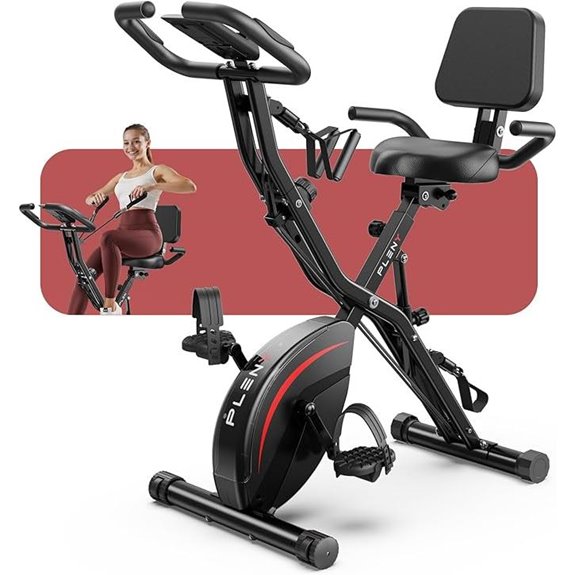 | Best All-in-One | Type: Folding 5-in-1 Exercise Bike | Folding/Storage: Foldable | Weight Capacity: 330 LBS | VIEW LATEST PRICE | See Our Detailed Review |
| XTERRA Fitness Folding Exercise Bike 225 LB Weight Capacity | 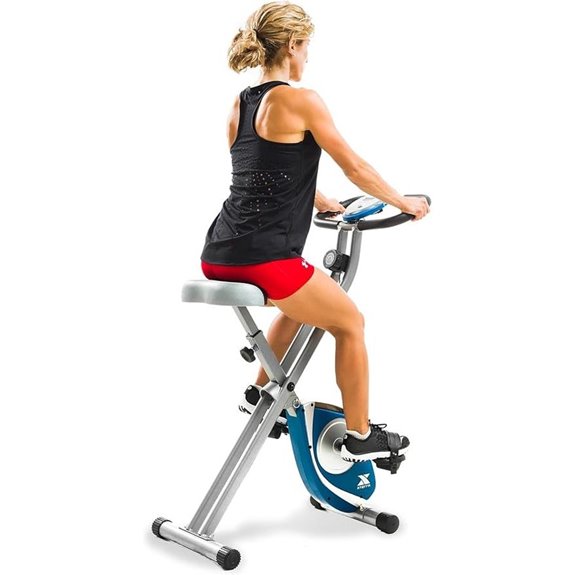 | Easy Folding Champion | Type: Folding Exercise Bike | Folding/Storage: Foldable | Weight Capacity: 225 LBS | VIEW LATEST PRICE | See Our Detailed Review |
| Foldable Exercise Bike for Small Apartments | 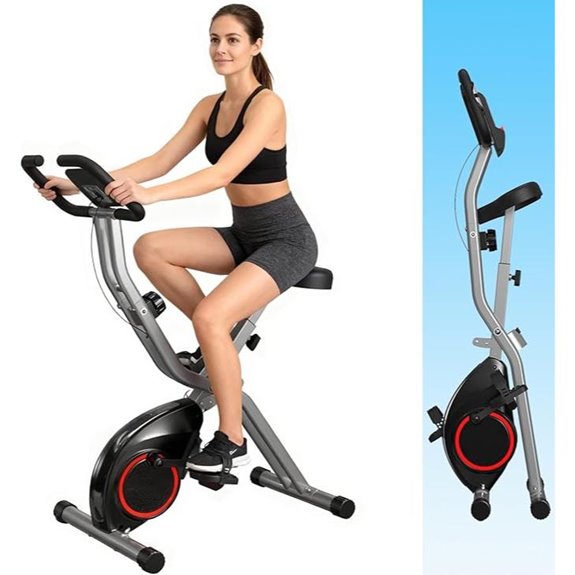 | Compact Powerhouse | Type: Foldable Exercise Bike | Folding/Storage: Foldable | Weight Capacity: 260 LBS | VIEW LATEST PRICE | See Our Detailed Review |
| Foldable 5-in-1 Indoor Exercise Bike with Resistance | 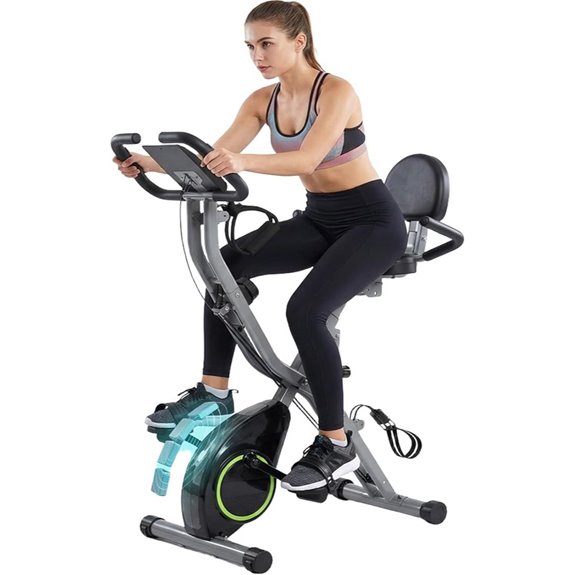 | Ultra-Quiet Performer | Type: Foldable 5-in-1 Indoor Exercise Bike | Folding/Storage: Foldable | Weight Capacity: 300 LBS | VIEW LATEST PRICE | See Our Detailed Review |
| Foldable Exercise Bike with 8-Level Magnetic Resistance | 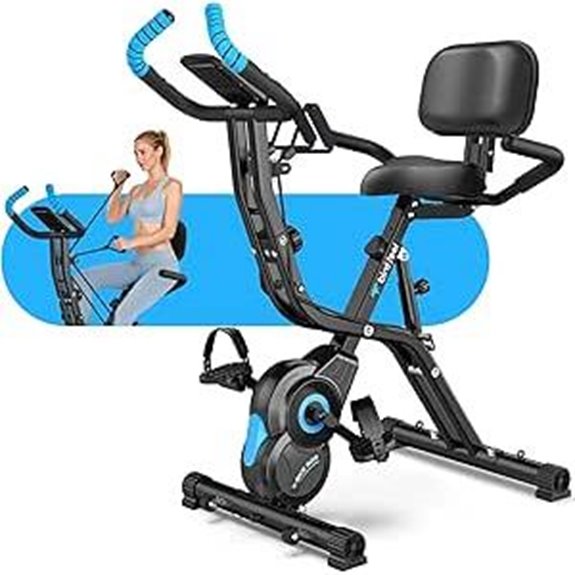 | Space-Saving Versatile | Type: Foldable Exercise Bike | Folding/Storage: Foldable | Weight Capacity: 300 LBS | VIEW LATEST PRICE | See Our Detailed Review |
| Folding Pedal Exerciser Under-Desk Bike for Exercise | 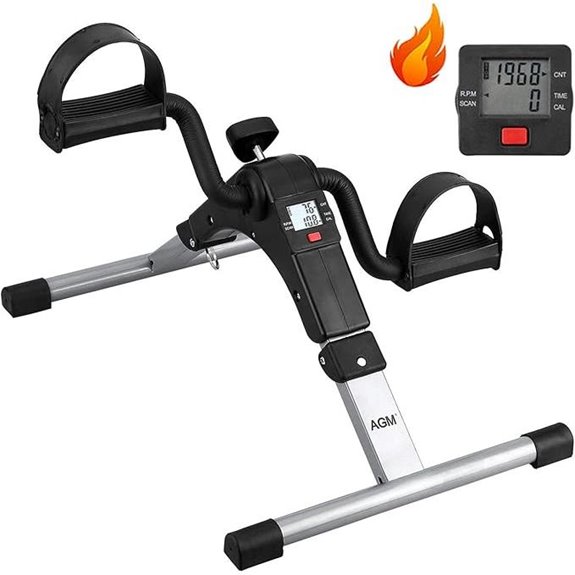 | Desk-Friendly Fitness | Type: Folding Pedal Exerciser (Under-Desk Bike) | Folding/Storage: Foldable | Weight Capacity: 400 LBS | VIEW LATEST PRICE | See Our Detailed Review |
| Pooboo Folding Indoor Cycling Bike with Resistance |  | Premium Foldable | Type: Folding Indoor Cycling Bike | Folding/Storage: Foldable | Weight Capacity: 300 LBS | VIEW LATEST PRICE | See Our Detailed Review |
More Details on Our Top Picks
Pleny 5-in-1 Folding Exercise Bike for Home Gym
The Pleny 5-in-1 Folding Exercise Bike is a solid pick for home gym setups, especially if you want versatility without taking up a lot of space. We review its 5-in-1 design, a 6.6 LBS flywheel, and 330 LBS weight capacity, with unfolded dimensions of 49D x 16W x 24H inches and folded 20 x 20 inches. The X-shaped sturdy frame, transport wheels, and magnetic resistance with 16 levels support fat burning, stretching, and strength work, plus resistance bands for rowing. Cushioned backrest, padded handle, and real-time heart rate monitor improve tracking, while quick assembly and 12 months parts replacement back reliability.
- Type:Folding 5-in-1 Exercise Bike
- Folding/Storage:Foldable
- Weight Capacity:330 LBS
- Resistance Type:Magnetic (16-level)
- Display/Tracking:LCD Monitor with heart rate
- Quick Setup Percentage / Pre-assembly:30–70% pre-assembled (implied ready after assembly)
- Additional Feature:Backrest cushioned
- Additional Feature:16-level magnetic resistance
- Additional Feature:LCD heart-rate monitor
XTERRA Fitness Folding Exercise Bike 225 LB Weight Capacity
A folding option like the XTERRA Fitness FB150 is ideal for apartment living or small spaces, thanks to its solid X-frame design and compact folded footprint of 18.1 x 18.1 inches. We review its 225 lb weight capacity, 32 lb unit weight, and overall dimensions of 31.89 x 18.1 x 43.3 inches. It uses a magnetic resistance with 8 levels, a belt drive, and a two-window LCD for speed, distance, time, calories, and pulse. The bike features a large seat, multi-position padded handlebars, adjustable footstraps, and a silver finish. Assembly is straightforward, with included hardware and batteries.
- Type:Folding Exercise Bike
- Folding/Storage:Foldable
- Weight Capacity:225 LBS
- Resistance Type:Magnetic (8-level)
- Display/Tracking:LCD Display with speed, distance, time, calories, pulse
- Quick Setup Percentage / Pre-assembly:Includes assembly instructions
- Additional Feature:Large anatomically designed seat
- Additional Feature:8 resistance levels
- Additional Feature:2 AA batteries included
Foldable Exercise Bike for Small Apartments
Foldable design makes the Foldable Exercise Bike for Small Apartments a strong fit for compact living spaces, especially when room is at a premium. We introduce the X-Bike 816 from LINBOLUSA, a gray indoor portable bike weighing 32 lbs with a 260 lb capacity. It offers 16 magnetic resistance levels and a silent ride under 20dB, with a 5.5 lb flywheel. Assembly is 70% pre-assembled and under an hour. It adjusts seat height across five levels and floor unevenness with six-tube support. Data tracks pulse, calories, time, distance, and speed on an LCD display. Includes phone holder and 12-month warranty.
- Type:Foldable Exercise Bike
- Folding/Storage:Foldable
- Weight Capacity:260 LBS
- Resistance Type:Magnetic (16-level)
- Display/Tracking:LCD Screen with real-time data (pulse, calories, time, distance, speed)
- Quick Setup Percentage / Pre-assembly:70% pre-assembled
- Additional Feature:16-level magnetic resistance
- Additional Feature:70% pre-assembled
- Additional Feature:Phone holder
Foldable 5-in-1 Indoor Exercise Bike with Resistance
This foldable 5-in-1 indoor bike targets buyers who want a compact, versatile workout option without sacrificing resistance or stability. We introduce the USLIM Foldable Exercise Bike, Model 817 X-bike, with 16-level magnetic resistance and a 6.6 lb flywheel. It supports up to 300 lbs and fits riders from 4’11” to 6’6″. It arrives 70% pre-assembled, with full setup under an hour. The LCD displays time, speed, and calories, and a phone holder adds convenience. It folds for storage and has built-in wheels. A 12-month protection plan accompanies purchase, with solid customer support and strong reviews.
- Type:Foldable 5-in-1 Indoor Exercise Bike
- Folding/Storage:Foldable
- Weight Capacity:300 LBS
- Resistance Type:Magnetic (16-level)
- Display/Tracking:LCD Tracks time, speed, calories
- Quick Setup Percentage / Pre-assembly:70% pre-assembled
- Additional Feature:16-level magnetic resistance
- Additional Feature:Foldable with built-in wheels
- Additional Feature:12-month protection commitment
Foldable Exercise Bike with 8-Level Magnetic Resistance
This foldable bike targets buyers seeking a compact, easy-to-store cardio option without sacrificing multiple resistance levels, since its 8-level magnetic resistance lets users adjust intensity for both beginners and more experienced riders. We present the Birdfeel Foldable Exercise Bike, a multifunctional indoor unit that weighs 40 lbs and folds to save space. It supports up to 300 lbs, with an oversized, padded seat and adjustable height for users 44–66 inches tall. It runs quietly, under 15dB, and includes dual resistance bands, a blue design, LCD monitor, phone holder, and battery power. Easy assembly, transport wheels, and small-space storage complete the package.
- Type:Foldable Exercise Bike
- Folding/Storage:Foldable
- Weight Capacity:300 LBS
- Resistance Type:Magnetic (8-level)
- Display/Tracking:LCD Monitor (distance, time, speed, calories)
- Quick Setup Percentage / Pre-assembly:70% pre-assembled
- Additional Feature:Dual resistance bands
- Additional Feature:Fully foldable mode
- Additional Feature:Oversized padded seat
Folding Pedal Exerciser Under-Desk Bike for Exercise
The Folding Pedal Exerciser Under-Desk Bike is ideal for anyone who wants an easy, space-saving way to fit cardio into a busy day, especially students and office workers who need a compact workout option. We describe a portable foot and hand cycle designed for home or office use, with a foldable, compact size that fits under desks. It uses metal, plastic, and ABS, has non-slip pedals with adjustable straps, and six resistance levels. The LCD shows RPM, time, speed, distance, and calories. Dimensions are 19.2 by 14.1 by 9.4 inches, weight 2.84 kg, capacity 400 pounds.
- Type:Folding Pedal Exerciser (Under-Desk Bike)
- Folding/Storage:Foldable
- Weight Capacity:400 LBS
- Resistance Type:N/A (pedal exerciser) but resistance-like tension knob (6 levels)
- Display/Tracking:Multifunctional LCD display (RPM, time, speed, distance, calories)
- Quick Setup Percentage / Pre-assembly:No specific pre-assembly percentage listed
- Additional Feature:Under-desk portability
- Additional Feature:400 lb weight capacity
- Additional Feature:RPM/time/speed/calories display
Pooboo Folding Indoor Cycling Bike with Resistance
If you’re shopping for a compact at-home cardio option, the Pooboo Folding Indoor Cycling Bike with Resistance stands out for small spaces thanks to its foldable design and wheels for easy moving. This foldable upright bike supports up to 300 pounds and uses an 8-level adjustable magnetic resistance with a 6.6 LBS flywheel for smooth, quiet rides. It includes a comfortable oversized seat, a bottle holder, and arm resistance bands, plus a fitness monitor that tracks time, speed, distance, calories, and heart rate. It’s a practical gift idea and fits many home gym setups. Price varies by retailer.
- Type:Folding Indoor Cycling Bike
- Folding/Storage:Foldable
- Weight Capacity:300 LBS
- Resistance Type:Magnetic (8-level)
- Display/Tracking:Fitness Monitor (time, speed, distance, calories) + device holder
- Quick Setup Percentage / Pre-assembly:70% pre-assembled
- Additional Feature:Bottle holder
- Additional Feature:Arm resistance bands
- Additional Feature:Mobile device holder
Factors to Consider When Choosing Portable Exercise Bike
When you choose a portable bike, start with portability and folding options, since compact designs and quick-fold mechanisms save space in small rooms or apartments. Check weight capacity, usually from 200 to 300 pounds, to ensure it fits your frame, plus look for adjustable resistance and a stable base for steady pedaling. Consider comfort features like padded seats, adjustable handlebars, a clear display, and tracking options, so you can monitor time, distance, and calories without clutter or confusion.
Portability and Folding
Portable exercise bikes vary a lot in how easy they are to move and store. When you choose, check folded dimensions, since models can differ a lot, with some folding down to compact sizes like 20 x 20 inches for easy storage. Look for lightweight options; many portable bikes weigh between 20 and 40 pounds, making them easier to move and transport. Ensure the bike has transport wheels to relocate it inside your home or workspace. Check assembly requirements, as some models come 70% pre-assembled, allowing quicker setup and immediate use. Evaluate the design; many portable bikes use a foldable X-frame that boosts stability and folds for small spaces. This combination supports convenient, everyday use without clutter.
Weight Capacity Limits
Weight capacity is a key factor when choosing a portable exercise bike. When you compare models, look at weight limits from 225 lbs up to 400 lbs, since higher limits mean a sturdier frame and safer workouts. A bike that supports 330 lbs can fit a wider range of users, including heavier athletes, without sacrificing performance. It’s important to match the bike’s capacity with your own weight to protect the frame and extend the machine’s life. Many portable bikes offer adjustable features to fit different heights and weights, improving comfort and form. Consider how easy it is to verify weight ratings in product specs and user manuals before you buy.
Resistance Variety
A good portable exercise bike should offer a broad range of resistance so you can tailor workouts as you improve. When you pick, check how many resistance levels exist, typically from 6 to 16, to match your pace and goals. Magnetic resistance systems are common, giving smooth, quiet adjustments that don’t distract during routine rides. Some models add dual resistance bands, expanding options for upper-body work and strength moves alongside cycling. A heavier flywheel weight often brings a steadier, smoother ride, making the higher resistance feel more controlled. Look for both high- and low-intensity settings to cover beginners up to more advanced athletes. This variety helps you progress without needing multiple machines.
Comfort and Adjustability
When choosing a portable exercise bike, focus on comfort and adjustability to fit a wide range of users. Look for adjustable seat heights, typically supporting about 4’10” to 6’6″ in height, so more people can ride comfortably. Ensure the seat is padded and ergonomically designed for longer sessions. Consider bikes with adjustable handlebars for different grip positions and added comfort during workouts. A cushioned backrest can provide extra support, especially on longer rides. Choose models with smooth, quiet resistance to prevent distractions and keep the ride calm. Prioritize simple adjustment levers, clear markings, and sturdy construction, so you can quickly customize fit without tools. These features enhance daily use and overall satisfaction.
Display and Tracking
Display and tracking are key when you’re choosing a portable exercise bike. An LCD monitor should show time, distance, speed, calories burned, and heart rate for real-time feedback. Some models auto-record data as you ride and stop after inactivity, which simplifies tracking. Look for clear, easy-to-read displays so you can glance at numbers without breaking your rhythm. A phone holder can add value, letting you watch videos or join live classes while you monitor your performance. Multiple modes or resistance levels shown on the screen help you tailor workouts to your goals and progress. Choose accurate sensors and straightforward menus, and ensure the display remains legible in different lighting conditions for quick, reliable checks.
Assembly and Support
Many portable bikes are mostly ready to ride out of the box, so you won’t spend hours assembling. Most models come 70% pre-assembled, cutting final setup to under an hour. Clear instructions and video support help you complete the process, making assembly beginner-friendly. Look for step-by-step guides and a straightforward parts list, plus quick-start tips to avoid mistakes. Good customer support matters: a warranty or protection plan covers parts replacements and issues after purchase, giving you peace of mind. Some models have transport wheels, which makes moving the bike around your space simple. Adjustable handlebars, seat height, and pedals fit a wide range of heights and weights, improving comfort and usability.
Frequently Asked Questions
How Quiet Are These Bikes During Operation?
They’re quite quiet, typically around 40–60 decibels at mid-resistance, like a soft fan. You’ll notice a whoosh of air, but nothing disruptive, even in apartments. Magnetic resistance keeps noise low, while belt drives reduce rumble. Some models include an on-console fan and oversized cranks for smoother operation. If you want silence, look for “low noise” or “whisper-quiet” labels, and check user reviews for real-world measurements and any squeaks or vibrations.
Do They Require Professional Assembly or Tools?
Most portable exercise bikes don’t need professional assembly; you’ll usually set them up with basic tools included, like a little Allen key, and a few simple steps take about 15–30 minutes. Some models ship mostly assembled and only require attaching pedals or a monitor. Check the instruction sheet for torque specs and safety caps, and verify you have a screwdriver, wrench, and a stable space before you start. If unsure, contact customer support for guidance.
Can They Support Standing Cardio Routines Safely?
Yes, you can stand during cardio on many portable bikes, but safety varies by model. Look for a wide, slip-resistant base, foldable feet, and a stable frame rated for standing use. Check user weight limits (often 200–300 lbs), adjustable handlebars, and a firm console position. Avoid models with small pedal bases or wobbly assemblies. For safety, keep feet centered, use a comfortable stride, and avoid high-intensity standing bursts on entry-level units.
Are There Any Warranty or Return Policy Specifics?
Yes, warranty and return policies vary, so check each model. Most portable bikes offer 1–2 year limited warranties on frame and electronics, with 90–180 day returns at 10–30% restocking fees in some cases. Look for coverage on wear parts, such as pedals and belts, and what counts as a defect. Also verify if shipping is paid by you or the seller, and whether exchanges are allowed without restocking fees. Read the policy before buying.
What Maintenance Is Needed for Long-Term Use?
You’ll want regular maintenance to keep the bike reliable, like wiping down the frame after workouts, lubricating moving parts every 3 to 6 months, and checking bolts monthly. Inspect the belt or chain tension, replace worn pads, and recalibrate resistance if performance shifts. Clean the display and battery contacts, and follow the user manual’s cadence for part replacements, typically every 1 to 2 years. Keep a simple log of service and parts.
Wrapping It Up
You want a portable bike that fits your space and budget, so compare models by size, weight, and resistance. Look for folding dimensions, like 20–26 inches wide and 40–60 inches folded length, and a user weight limit around 225 pounds. Check easy height adjustments, display options, and price points from about $100 to $300. Consider assembly time and warranty, then pick a quiet, smooth cruiser with at least eight resistance levels for steady progress. This helps you stay consistent.


When I’m using a portable bike in a small room, what should I check so it doesn’t scrape or take forever to unfold? Like, for the Pleny 5-in-1 vs the XTERRA, how do you think about “set up time” and floor clearance in real life?
Measure more than the footprint: in a small room, check the clear “swing zone” for the handlebars and the stand as the bike unfolds, plus where the pedals and flywheel housing will sit once it’s upright. For the Pleny 5-in-1 vs the XTERRA, do a quick dry run in the open space you have—pay attention to how smoothly the fold locks and whether it finishes in one motion or needs repeated micro-adjustments. Also confirm your floor is level so the stability feet land flat right away. Finally, make sure you have enough room to step to the bike and start pedaling without shifting it again.
I’m trying to pick between the Pleny 5-in-1 folding bike and the Pooboo folding bike. Which one tends to be the better choice if I want smoother resistance when I increase intensity, not just “clicky” changes?
If smoother resistance as you increase intensity is the priority, I’d generally lean toward the Pleny 5-in-1. With 16 resistance levels, it’s more likely to change resistance in smaller increments, so step-ups tend to feel more continuous rather than noticeably segmented. That said, “clicky vs smooth” often depends on the specific resistance mechanism, not just the number of levels—so the best tie-breaker is to compare a short resistance demo from real users. If you can, focus on clips where they ramp intensity quickly and listen/feel for any jerky transitions between levels.
Set this folding exercise bike up in a spare corner after work, and it felt surprisingly straightforward to get moving without having a big setup taking over the room. The folding design meant I could tuck it away when company came by. Quick impression: it fits the “short session, then back to normal” routine.
I’m trying to plan this around work. What should I prepare before calling someone about 7 portable exercise bikes for (compact & powerful)?
Before you call about portable exercise bikes for compact, powerful workouts, have a short checklist ready: your available space in Las Vegas (including doorways and how much floor area you can spare), how long you’ll train per session, your height/inseam and desired seat height range, and the maximum weight capacity you need. Also note your must-haves: smooth resistance control (how many levels you want), noise expectations, and whether you need it to fold in one quick motion. If possible, ask the caller to confirm the exact resistance type, console features, and what assembly/folding steps are required on arrival. Finally, ask for warranty and return terms.
I’m choosing between the compact folding bikes on your list, and I’m wondering about real-world comfort: how do you decide which one will be easier on my hips and wrists during longer sessions if I’m doing 35–45 minute workouts?
For 35–45 minute sessions, I pick the bike that lets you keep a neutral spine and reduce pressure at both contact points: hips at the saddle and wrists at the grips. First, I compare seat adjustment range (height plus ability to fine-tune fore-aft/seat position). If you can’t get the right knee bend without reaching, hip discomfort shows up sooner. Next, I check handlebar adjustability: higher/closer bars reduce wrist extension and forearm load, especially if you tend to lean forward. Finally, I look for a stable base with minimal wobble and a smooth, quiet resistance ramp—jerky pedaling and side-to-side movement make wrists and hips fatigue faster.
I’m planning to use a portable folding bike almost daily and will likely store it in a closet or nook between rides. Between the Pleny and the XTERRA models, how much should I worry about the fold hinges and adjustment points wearing out over time?
If you’ll fold and unfold the bike almost daily in Miami and store it in a closet, I’d worry only moderately about hinge and adjustment wear—both of these designs can handle frequent use, but the risk is higher at the contact points you move most. With the Pleny-style folding hinges and “all-in-one” adjustments, look for any wobble right after unfolding and whether the seat and leveling knobs keep their tight hold under resistance. With the XTERRA, pay close attention to the folding joints and seat post adjustment; any new creaks, looseness, or micro-movement during harder resistance usually means those areas are starting to wear. Keep folds aligned, don’t force them, and wipe/lube the moving contacts occasionally.
I’m looking at the portable foldable ones, but I don’t want to fight with tiny seat/handle adjustments every time. How should I check whether the saddle and handlebar settings are quick and stable for repeated use?
When you evaluate portable foldable exercise bikes, check the saddle and handlebar in actual repeated use, not just the number of adjustment “levels.” Look for clearly defined locking mechanisms: a solid knob/clamp or lever that tightens quickly without needing you to perfectly line up parts first. Test in the store or at home by raising and lowering the seat a few times and then confirming the same height/feel each time. Repeat for the handlebars. Finally, reposition the handlebar and make sure the display remains readable and doesn’t end up at an awkward angle after locking.
i’m a heavier rider and Im debating between the Pleny (330 lb) and the XTERRA (225 lb). How should I think about safety and not over-pushing the weight limit if Im near the top end of the spec?
Treat the published weight capacity as the absolute ceiling, not a goal—especially if you’re near the top end. For safety, choose the Pleny’s 330 lb rating if it’s within your budget, since it’s giving you more margin for stability and for extra stress on the saddle, handlebars, and frame when you hit harder resistance. Also, don’t “test” the limit: start at lower resistance, keep your posture neutral, and only increase gradually. If the bike feels like it’s flexing, creaking, or slipping, back off immediately. Finally, confirm your seat/handle positioning so you’re not compensating with awkward form during higher resistance pushes.