
If you want hands‑free control and clear visuals in 2026, consider these seven voice‑controlled displays: the Amazon Echo Hub with an 8” 1280×800 touchscreen and Zigbee/Matter support; the Smart Scene Wall Switch Panel with a 4” LCD and 410k+ TUYA compatibility; the SONOFF NSPanel Pro 120 offering Zigbee and energy monitoring; a portable 7″ CarPlay Car Stereo; the ApoloSign 32″ 4K portable touchscreen with built‑in battery; the PUSOKEI AI Voice Robot; and an 8.1″ CarPlay screen. They vary in price, size, and connectivity, so compare features, privacy, and expandability first—there’s more to learn as you compare.
| Amazon Echo Hub: 8” Alexa Smart Home Panel | 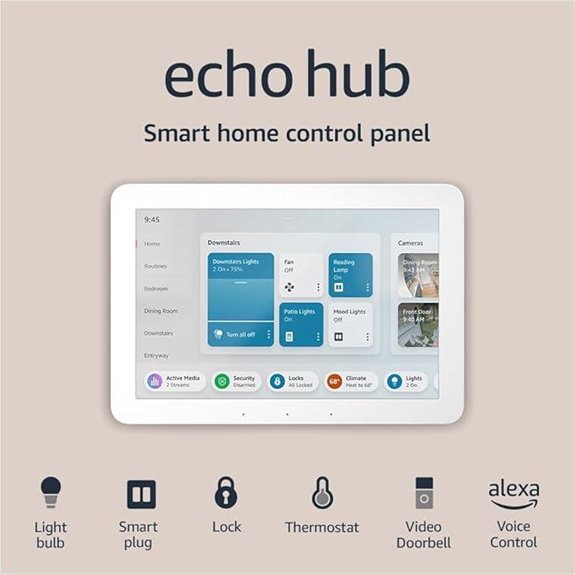 | Best Overall | Display: 8” touch screen | Voice Control: Yes (Alexa) | Connectivity: WiFi/Bluetooth/Zigbee/Matter/Thread | VIEW LATEST PRICE | See Our Detailed Review |
| Smart Scene Wall Switch Panel with Touch Screen and Voice Control | 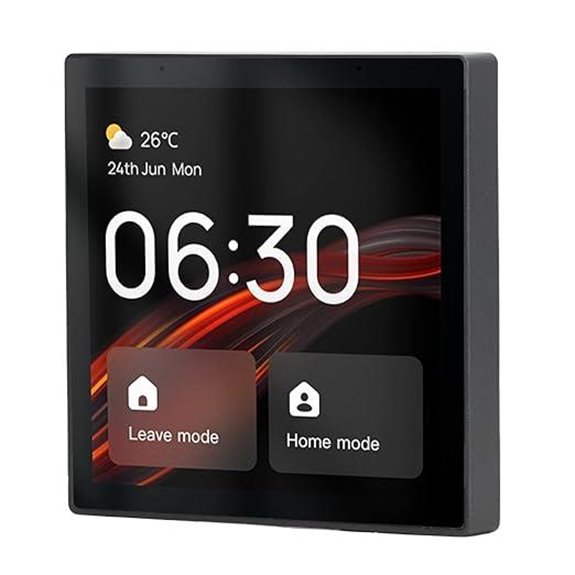 | Customizable Quick Access | Display: 4-inch LCD screen | Voice Control: Yes (voice control for scenes) | Connectivity: Tuya-compatible with APP remote control | VIEW LATEST PRICE | See Our Detailed Review |
| SONOFF NSPanel Pro 120 Smart Home Control Panel | 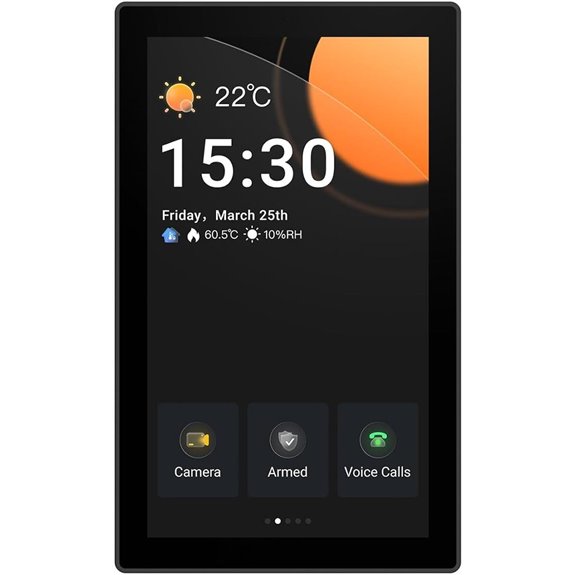 | Security-Centric Control | Display: 4.7-inch display | Voice Control: Yes (voice control via panels) | Connectivity: Zigbee gateway | VIEW LATEST PRICE | See Our Detailed Review |
| Portable Wireless Carplay Car Stereo with 7″ HD Touchscreen | 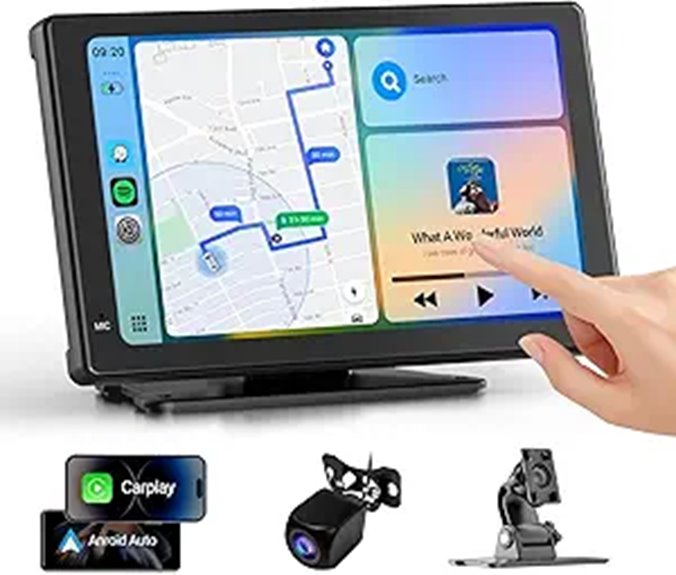 | Car-Ready Entertainment | Display: 7″ HD Touchscreen | Voice Control: Yes (Siri/Google Assistant via CarPlay) | Connectivity: Bluetooth, USB, FM, GPS | VIEW LATEST PRICE | See Our Detailed Review |
| ApoloSign 32″ UHD 4K Portable TV with Battery | 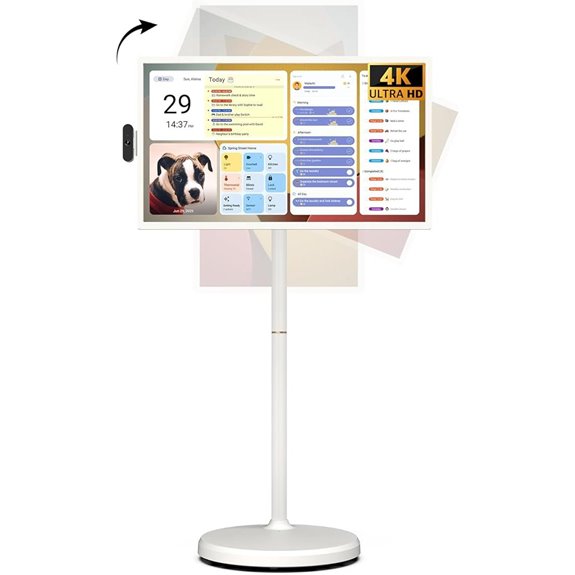 | Portable Big Screen | Display: 32″ UHD 4K touchscreen | Voice Control: Yes (Google Gemini AI Voice Assistant) | Connectivity: Wireless/wired projection; HDMI/USB | VIEW LATEST PRICE | See Our Detailed Review |
| PUSOKEI AI Voice Robot Smart Assistant ESP32 S3 |  | Tiny AI Assistant | Display: 1.28 inch display | Voice Control: Yes (voice wakeup, Bluetooth) | Connectivity: WiFi/Bluetooth | VIEW LATEST PRICE | See Our Detailed Review |
| 8.1″ CarPlay Screen with Wireless CarPlay & Android Auto | 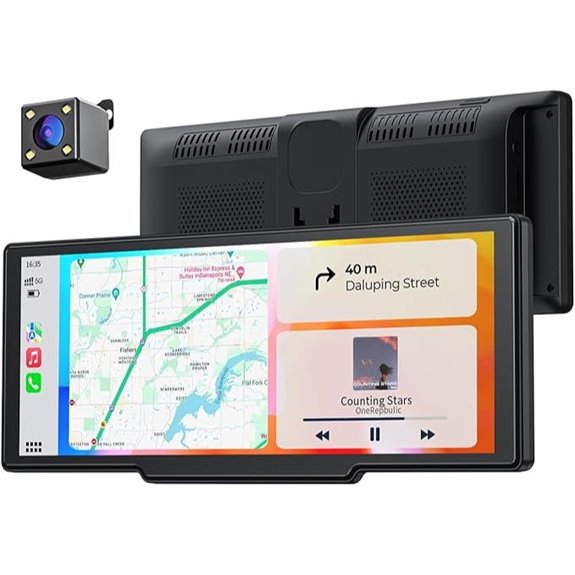 | Premium Wireless CarPlay | Display: 8.1″ Wireless Portable CarPlay Screen | Voice Control: Yes (hands-free voice control) | Connectivity: True wireless CarPlay/Android Auto | VIEW LATEST PRICE | See Our Detailed Review |
More Details on Our Top Picks
Amazon Echo Hub: 8” Alexa Smart Home Panel
The Amazon Echo Hub is a great pick for anyone who wants a centralized, voice-first control panel in their smart home. You get an 8” touchscreen, 1280 x 800 display, and stereo speakers for clear sound. It works with WiFi, Bluetooth, Zigbee, Matter, Sidewalk, and Thread, so you can control lights, cameras, locks, and thermostats by voice or touch. Privacy options include a mic off button and voice recording management. It mounts on a wall or sits on a table, with optional power-over-Ethernet or in-wall cable pass-throughs. Made from recycled materials, it blends with modern interiors.
- Display:8” touch screen
- Voice Control:Yes (Alexa)
- Connectivity:WiFi/Bluetooth/Zigbee/Matter/Thread
- Power / Power Source:Wall mount or power over Ethernet (sold separately)
- Security / Privacy:Privacy controls (mic off, data management, E2EE)
- Operating System / Platform:Alexa-enabled OS
- Additional Feature:In-wall cable pass-through option
- Additional Feature:Table-top stand available
- Additional Feature:Privacy mic off button
Smart Scene Wall Switch Panel with Touch Screen and Voice Control
A Smart Scene Wall Switch Panel with Touch Screen and Voice Control is a solid pick if you want a centralized control point that doubles as a quick-access hub, since it lets you launch scenes with simple voice commands and keeps your most-used devices a tap away. It operates on 100-240V and uses a 4-inch LCD screen that shows date, time, and daily weather. Measuring about 8.6 by 8.6 cm, it supports voice commands to activate scenes and can be controlled remotely via an app. It’s compatible with over 410,000 TUYA products and handles up to 20 device types.
- Display:4-inch LCD screen
- Voice Control:Yes (voice control for scenes)
- Connectivity:Tuya-compatible with APP remote control
- Power / Power Source:100-240V (wall switch panel)
- Security / Privacy:Scene/Access control security implied
- Operating System / Platform:Tuya platform integration
- Additional Feature:4-inch LCD weather display
- Additional Feature:410,000 TUYA compatibility
- Additional Feature:20 device types supported
SONOFF NSPanel Pro 120 Smart Home Control Panel
If you want a single-screen hub with built-in Zigbee control and security, the Sonoff NSPanel Pro 120 stands out for compact smart home setups. This 4.7-inch panel combines a Zigbee gateway with camera viewing, energy monitoring, thermostat control, lighting management, and web browsing, all from one place. You can customize three security modes, trigger alarms on sensor activity, and receive phone alerts. It shows weekly energy stats and supports live camera feeds, helping you stay efficient. Dimensions are 4.8 x 3 x 1.7 inches, weight 7.8 ounces, with no batteries required, making installation straightforward.
- Display:4.7-inch display
- Voice Control:Yes (voice control via panels)
- Connectivity:Zigbee gateway
- Power / Power Source:Wall/panel integration (powered via panel)
- Security / Privacy:Security modes with arming and alarms
- Operating System / Platform:Noted Zigbee gateway with app interfaces
- Additional Feature:Zigbee gateway built-in
- Additional Feature:Real-time energy monitoring
- Additional Feature:Web camera view support
Portable Wireless Carplay Car Stereo with 7″ HD Touchscreen
This portable wireless CarPlay car stereo with a 7″ HD touchscreen is a solid pick for drivers who want easy, on-the-go Apple CarPlay or Android Auto access without a full dashboard install. You get wireless CarPlay and Android Auto via Bluetooth, Wi-Fi, or USB, plus voice control with Siri or Google Assistant. It mounts with an adjustable dashboard bracket and plugs into the cigarette lighter for simple setup. The 1024×600 HD touchscreen supports screen mirroring, GPS navigation with real-time directions, a 1080P rearview camera, Bluetooth audio, FM, AUX, and backup features. Weight is 1.92 pounds. Warranty: 1 year.
- Display:7″ HD Touchscreen
- Voice Control:Yes (Siri/Google Assistant via CarPlay)
- Connectivity:Bluetooth, USB, FM, GPS
- Power / Power Source:Cigarette lighter power
- Security / Privacy:Car safety features (backup cam included)
- Operating System / Platform:Android Auto/CarPlay integration
- Additional Feature:Wireless CarPlay/Android Auto
- Additional Feature:Backup 1080P rearview camera
- Additional Feature:Universal dashboard mounting
ApoloSign 32″ UHD 4K Portable TV with Battery
The ApoloSign 32″ UHD 4K Portable TV with Battery stands out for on-the-go versatility, thanks to its built-in 15000mAh battery that delivers up to 8 hours of viewing without a power outlet. You get a 32-inch 3840×2160 touchscreen with ten-point touch and Android 15, plus 256GB storage and 16GB RAM split across two modules. It weighs about 48.2 pounds and measures 16.14 by 28.87 by 60.26 inches. You’ll enjoy wireless or wired projection, HDMI and USB ports, and full swivel viewing with a mobile base. It’s 4K ready, supports Gemini AI, and promises solid 24/7 support.
- Display:32″ UHD 4K touchscreen
- Voice Control:Yes (Google Gemini AI Voice Assistant)
- Connectivity:Wireless/wired projection; HDMI/USB
- Power / Power Source:Battery-powered (built-in 15000mAh)
- Security / Privacy:General smart TV security features not specified
- Operating System / Platform:Android 15 with Gemini AI
- Additional Feature:15,000 mAh battery
- Additional Feature:Google Gemini AI Voice
- Additional Feature:32″ 4K touchscreen
PUSOKEI AI Voice Robot Smart Assistant ESP32 S3
PUSOKEI AI Voice Robot Smart Assistant ESP32 S3 stands out for its compact 1.28-inch display and built-in voice wakeup, making it a practical pick for small spaces where quick, hands-free help matters. You get a 240×240 screen, WiFi 802.11a/b/g/n, and Bluetooth 5.0 for easy pairing, plus local weather and time updates via WiFi. It supports video and music playback without extra programming and runs real-time tasks with the ESP32 S3. The device weighs about 3.03 ounces and uses a 400mAh Li battery, with optional up to 32GB memory. It’s a simple, low-profile assistant you can trust.
- Display:1.28 inch display
- Voice Control:Yes (voice wakeup, Bluetooth)
- Connectivity:WiFi/Bluetooth
- Power / Power Source:Battery-powered (Li battery)
- Security / Privacy:Local weather/time with WiFi sync (privacy not specified)
- Operating System / Platform:ESP32 S3 based
- Additional Feature:1.28″ display
- Additional Feature:Local video/music playback
- Additional Feature:WiFi time/weather sync
8.1″ CarPlay Screen with Wireless CarPlay & Android Auto
If you want a straightforward CarPlay and Android Auto setup on the go, this 8.1″ Wireless Portable CarPlay Screen is a strong choice. It supports Apple CarPlay and Android Auto with a 1600×600 display and 60FPS touch response, plus brightness of 550 cd/m² and a 1000:1 contrast. You get true wireless CarPlay and Android Auto, access to Apple Maps or Google Maps, hands-free calls, messaging, and Bluetooth audio. It includes a rearview camera with night vision and automatic activation when reversing, plus steering wheel integration. Plug-and-play via the cigarette lighter, OTA updates, and a 2-year optional extended warranty.
- Display:8.1″ Wireless Portable CarPlay Screen
- Voice Control:Yes (hands-free voice control)
- Connectivity:True wireless CarPlay/Android Auto
- Power / Power Source:Car power via cigarette lighter
- Security / Privacy:Rearview camera integration and safety features
- Operating System / Platform:CarPlay/Android Auto platform
- Additional Feature:True wireless CarPlay/Android Auto
- Additional Feature:OTA firmware updates
- Additional Feature:Night-vision rearview camera
Factors to Consider When Choosing Voice-Controlled Smart Display
When choosing a voice-controlled smart display, you’ll want to check voice assistant compatibility, screen size that fits your space, and support for common smart-home protocols like Matter or Zigbee. Look for easy privacy controls, clear microphone indicators, and straightforward options to mute or delete recordings, plus reliable Wi‑Fi plus any needed Bluetooth or USB ports for accessories. Consider the price range, built-in speakers, and ongoing software updates, so you get solid value and helpful features over time.
Voice Assistant Compatibility
Voice assistant compatibility is a key factor when choosing a voice-controlled smart display. You should confirm compatibility with popular assistants like Alexa, Google Assistant, or Siri to access a wide range of features and device integrations. Check for multi-language support, such as English and Spanish, to fit your household needs. Review privacy controls, including mic off buttons and options to manage voice recordings, since safety matters. Consider the level of voice recognition, like adaptive listening and adjustable speaking rates, which improve interaction for different users. Look for seamless connectivity with other smart home products, ensuring quick setup and reliable control. Prioritize devices offering straightforward app setup, clear update policies, and transparent privacy terms for ongoing peace of mind.
Screen Size Relevance
Screen size matters because it directly affects how you interact with a voice-controlled smart display. The 8” and 4.7” models offer better visibility for touch and voice commands, so you can see controls and responses more clearly. A 4-inch screen may limit how much information you view at once, which matters when juggling several smart-home devices or live feeds. Larger screens often improve multimedia use, making videos and photos easier to enjoy with clearer detail. Resolution also plays a role; higher pixel counts create sharper video calls and camera views. Size should match use: portable devices benefit from compact screens, while stationary setups can justify bigger displays for more features. Choose based on where and how you’ll use it most.
Smart-Home Protocols
Smart-home protocols determine how your voice-controlled display talks to lights, cameras, and sensors, so you’ll want to choose a model that supports the right mix for your setup. Protocols enable devices to communicate within a network, ensuring compatibility and efficiency in home automation. Common options include WiFi, Bluetooth, Zigbee, and Matter, each with different connectivity benefits. Zigbee runs on a low-power mesh network, letting many devices cover a larger area while using less energy than traditional WiFi. Matter aims to unify devices across ecosystems, promoting interoperability and simpler use. Understand these basics to optimize compatibility and maximize features on your display. If you plan expansion, prioritize devices with Matter support; it simplifies future integration and reduces pair‑purchasing frustration.
Privacy Controls Options
Privacy controls on voice-controlled smart displays come into play after you pick a model, so it’s worth weighing what each device offers to protect what you say and hear. You’ll find physical mic off buttons on many models, letting you disable voice activation when you’re not using it. Some displays let you review and delete stored audio data, which boosts privacy without sacrificing function. Advanced options may include end-to-end encryption for secure chats and commands, helping keep your information private from outsiders. Accessibility features, like adaptive listening and adjustable speaking rates, support clear use while guarding your privacy. Environmentally focused designs—responsibly sourced materials and packaging—matter if you care about overall privacy ethics and sustainability.
Connectivity And Ports
When choosing a voice-controlled smart display, start by checking the connectivity and ports to ensure it fits your setup. Look for multiple options like WiFi, Bluetooth, Zigbee, and Ethernet, so your devices stay compatible as you expand. Prefer models that support both wired and wireless connections for flexible placement and easy network changes. Examine the port selection—HDMI, USB, and AUX matter for multimedia use, external storage, and audio accessories. Check for modern interoperability protocols such as Matter and Sidewalk to improve cross-brand compatibility. Consider power options, including power-over-Ethernet, which can reduce cables and simplify installation. Also note firmware updates and supported mesh networks, since ongoing updates can extend performance and security. In short, prioritize flexible, future-proof connectivity.
Expandability And Add-Ons
Expandability and add-ons give you real room to grow a voice-controlled smart display without replacing the whole setup. When you pick a model, check compatibility with WiFi, Bluetooth, Zigbee, and Matter, so it works with your existing devices and ecosystems. Look for options to add-ons like camera modules, extra sensors, or smart hubs, since these boost capabilities without a full upgrade. Ensure the display can control up to 20 device types, including lights, cameras, and security systems, for broad automation. See if it supports customizable scenes or routines that you can easily add, letting you automate tasks across devices. Also consider OTA updates for future features, keeping the device current without extra purchases. This mix helps future-proof your setup.
Frequently Asked Questions
Which Displays Support Multi-Room Voice Control Syncing?
Multi-room syncing is supported on Google Nest Hub Max, Nest Hub (2nd gen), and Nest Audio with Chromecast; Amazon Echo Show 8, 10, and Echo Studio also sync in groups via Alexa. Apple HomeKit displays are limited, so check each model. In practice, expect synchronized playback across rooms, simple setup in the app, and reliable voice commands. Prices range from about $129 to $249, depending on size and screen. Consider Wi‑Fi stability for best results.
Do They Require Constant Internet Connectivity to Function?
Yes, they mostly need internet to function well, since voice commands, streaming, and updates come from the cloud, but some basic on-device tasks can work offline. Expect occasional offline mode limits, like not streaming or checking weather. If you lose Wi‑Fi, you’ll still control smart home basics, play locally stored media, and access stored reminders, though features like assistant responses, updates, and multi-room syncing may pause until reconnected. Check each model’s offline capabilities before buying.
Can They Operate Without a Smartphone App?
Yes, they can work without a smartphone app, but with caveats. You’ll access most features directly on the device, like voice commands, music, timers, and smart-home control, yet setup, updates, and some settings may require an app later. Expect on-device setup in many models, occasional app-free periods, and full functionality returning after pairing. If you want offline usage for basic tasks, check models that emphasize local processing and limited cloud dependence.
What Privacy Controls Are Built-In for Voice Data?
You’ll find built‑in privacy controls like mute buttons, opt‑in voice data, and on‑device processing options. Most devices offer a toggle to review and delete recordings, and you can disable VLAN-like wake words or disable auto‑transcriptions. Expect end‑to‑end encryption for commands, monthly activity summaries, and a clear privacy dashboard to manage permissions. Look for hardware switches, transparent data policies, and easy deletion; prices range $99–199, features vary by model.
Which Models Offer Battery-Powered Portability?
Yes, several models offer battery-powered portability, though most smart displays are plug-in. Look for built-in battery options on certain Echo Show and Google Nest devices, or detachables like portable hubs from some brands. Typical autonomy ranges from 6 to 12 hours, with weights around 1.5 to 2.5 pounds, and prices from $199 to $399. If you need all-day use, choose models advertised as portable or with optional external batteries.
Wrapping It Up
You’ll choose smart displays that fit your setup, from wall panels to portable screens. Consider size, price, and features like 8” panels, touch control, and voice assistants. For cars, look at CarPlay compatibility and battery-free options; for home use, check Wi‑Fi, Zigbee, and smart home hubs. Expect prices ranging roughly from mid‑hundreds to over a thousand, with warranties and updates varying by model. Assess your space, needs, and budget, then pick the most practical, reliable option.


I’m torn between the Amazon Echo Hub and the SONOFF NSPanel Pro 120. If I’m trying to keep it future-proof, which one is more expandable for adding more smart devices over time (and not just basic scene control)?
If you want to stay future-proof while adding a wide range of smart devices over time (not just basic scene control), the Amazon Echo Hub is typically more expandable. It’s designed to sit in the middle of the smart-home ecosystem, so new device types are more likely to connect without you changing your whole setup. The SONOFF NSPanel Pro 120 is a good choice, but its long-term growth tends to follow the Zigbee/gateway path—so expansion is more dependent on that specific compatibility route and whichever hub you pair it with. If you expect to keep mixing brands, Echo Hub has the safer expansion path.
I’m considering the Amazon Echo Hub or the SONOFF NSPanel Pro 120 for a quick voice-routines setup, but I’m worried about whether the mic will still pick up commands if the panel is mounted a bit higher or there’s glare from a window. How should I test placement before installing?
Do a short placement test with the exact intended height and angle before you drill. In Spring Valley, mount the Echo Hub or NSPanel Pro 120 temporarily (or prop it securely) right where the panel will go, at the same distance from where you’ll stand when you give voice commands. Then run your usual routines from each “daily” spot—your couch/chair, kitchen work area, and any spot where you might move while speaking. After that, check window glare by doing the same test with daylight conditions you expect: test once in the brightest time of day and again after turning nearby lights on, watching for both screen glare and whether you have to speak louder due to reflections. Also avoid aiming the microphone/panel toward the window and keep the front unobstructed.
I set up the Echo Hub on the wall near my main hallway so it’s there when I’m coming and going. The touchscreen felt natural to glance at, and the voice control made it simple to adjust my basics without reaching for apps. Quick impression: it fits the routine of a typical house pass-through.
I’m setting up a hands-free routine for lights and audio, but I also want the display to show local sensor data. Between the Echo Hub and the Tuya/SONOFF-style panels, which one is better at showing things beyond basic scenes, and why?
Echo Hub is usually the better choice if you want the display to show local sensor-style data beyond basic lighting scenes. It’s designed as an Alexa smart home hub experience, so it’s more likely to support rich, on-screen dashboards (device status and data views) and keep those updates consistent in daily routines. Tuya/SONOFF-style panels can look great for controlling lights and triggering automations, but what shows “beyond scenes” depends heavily on your exact sensor integrations, the device/app model, and what variables that panel is allowed to render. If your goal is reliable sensor visibility in Manor, Echo Hub is the safer bet.
I already have a couple of Zigbee bulbs and plugs, and I’m trying to decide between the Echo Hub and a Tuya-style panel for voice control. I’m worried I’ll end up with devices that only work half the time unless I buy one ecosystem and stay locked in—what should I check before ordering?
Before ordering, check that the Echo Hub (Alexa) or the Tuya-style panel actually supports your exact Zigbee hub/bridge situation and device models. Confirm the method of adding Zigbee devices (built-in Zigbee vs pairing through an existing Zigbee hub) and whether it can pair the same way for bulbs and plugs you already own. Also verify local control and reliability: look for “local Zigbee control” and avoid setups that depend entirely on cloud, and test your Wi‑Fi strength where the display will sit. Finally, double-check routines/voice scenes support for individual devices, not just groups, so “half the time” issues don’t happen.
I’m trying to pick between the Amazon Echo Hub and one of the local-first panels for my setup. If I’m mostly asking for routines like lights and notifications, how much do they actually differ in what data gets sent to the cloud versus staying local?
If you’re mainly using routines for lights and notifications, the practical difference is less about “which exact data type” and more about where the automations are decided. With the Amazon Echo Hub, your voice requests are tied to Alexa account processing, so intent/scene selection generally goes through Amazon’s cloud, and then the hub triggers your Zigbee/Matter devices locally where possible. With local-first panels (the NSPanel-style route), the panel usually relies on your local Zigbee hub/gateway to run scenes and handle most routine logic, so cloud involvement can be limited to what you explicitly connect (like remote access or third-party voice features).