The 2026 lineup of solar-powered phone chargers includes models with high capacities, rugged builds, and quick charging options, such as 49,800 mAh banks with multiple cables and PD3.0, 40,000 mAh units with lights, and compact 10,000 mAh packs with USB-C. Features vary from IP67 durability to built-in flashlights and foldable panels. Prices range widely, and performance depends on sun exposure and device compatibility. Each option suits different needs, but which one fits best may surprise you.
Key Takeaways
- Compare capacity and output: prioritize 40,000mAh+ packs with 20–22.5W PD or higher for faster, multiple-device charging in 2026.
- Built-in cables matter: models with USB-C/Lightning/Micro USB cables reduce clutter and simplify outdoor use.
- Durability and weather resistance: look for IP67/IP68, rugged shells, and safety protections for remote or harsh environments.
- Solar panel efficiency: higher panel wattage and >20% efficiency improve daytime charging, especially with direct sunlight.
- Safety standards: ensure UL2056/UN38.3 compliance and protection features like overcharge and short-circuit safeguards.
| Solar Power Bank 49800mAh with 4 Cables 22.5W PD3.0 | 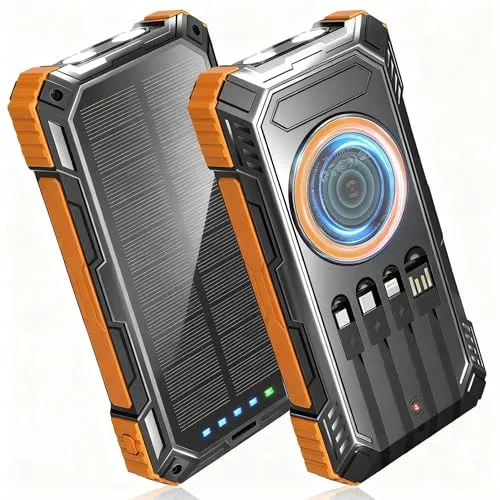 | Best Overall Power Bank | Capacity: 49800mAh | Solar charging: Yes (solar panel) | Built-in cables / ports: Built-in cables (iOS, Type-C, Micro, USB-A input) | VIEW LATEST PRICE | See Our Detailed Review |
| Solar Charger Power Bank 40000mAh with 4 Cables & Lights | 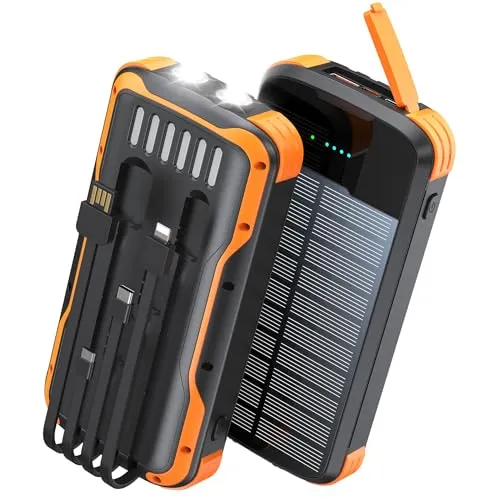 | Outdoor Ready Power Bank | Capacity: 40000mAh | Solar charging: Yes (solar panel) | Built-in cables / ports: Built-in cables (Type-C, iOS, Micro USB) | VIEW LATEST PRICE | See Our Detailed Review |
| Hand Crank Solar Radio with Waterproof Bluetooth Speaker | 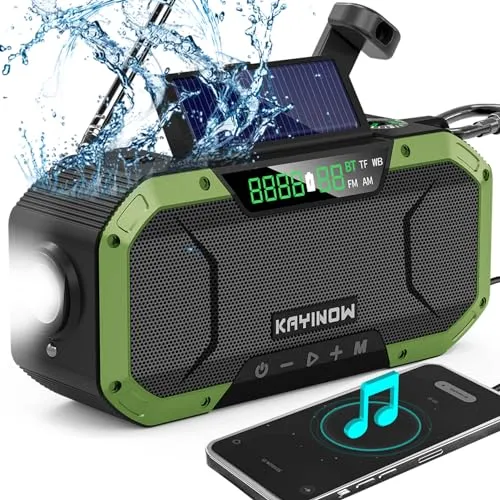 | Emergency Radio Companion | Capacity: 5000mAh | Solar charging: Yes (hand crank + solar recharge) | Built-in cables / ports: No built-in cables mentioned | VIEW LATEST PRICE | See Our Detailed Review |
| ERRBBIC 49800mAh Solar Power Bank with USB-C Flashlight | 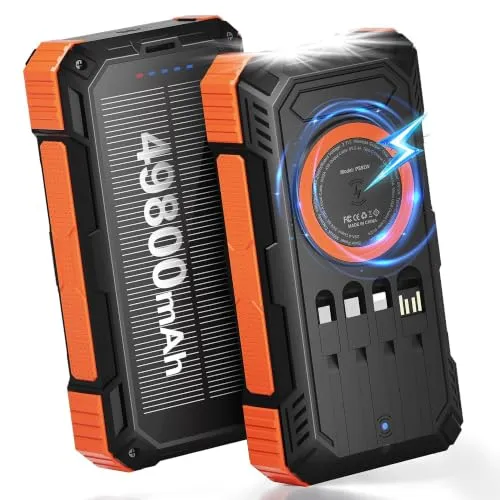 | High-Capacity Solar Champion | Capacity: 49800mAh | Solar charging: Yes (solar panel) | Built-in cables / ports: Built-in cables (Type-C, Lightning, Micro, USB-A) | VIEW LATEST PRICE | See Our Detailed Review |
| BigBlue 28W Solar Panel Charger with Dual USBs | 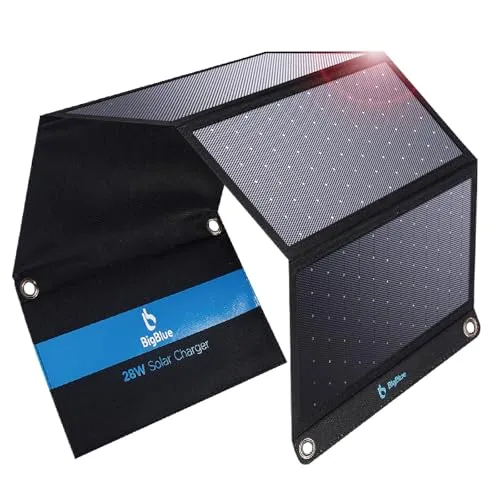 | Ultra-Portable Panel Charger | Capacity: Not specified | Solar charging: Yes (solar charging panel) | Built-in cables / ports: Built-in USB cables (unspecified count) | VIEW LATEST PRICE | See Our Detailed Review |
| Durecopow 20,000mAh Solar Power Bank with Cables | 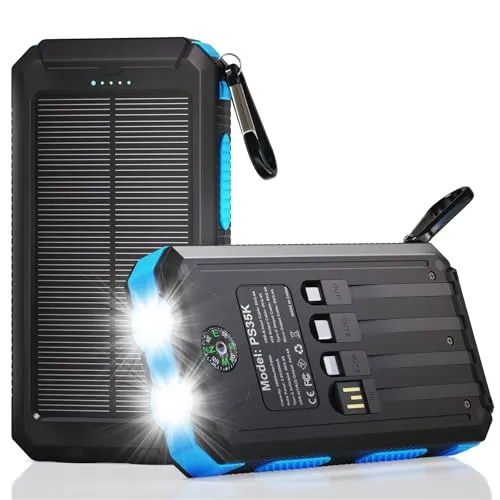 | Rugged Multi-Device Charger | Capacity: 20000mAh | Solar charging: Yes (solar charging) | Built-in cables / ports: 4 built-in cables (Type C, Lightning, Micro USB, USB-A) | VIEW LATEST PRICE | See Our Detailed Review |
| Solar Charger Power Bank 20000mAh with Built-in Cables | 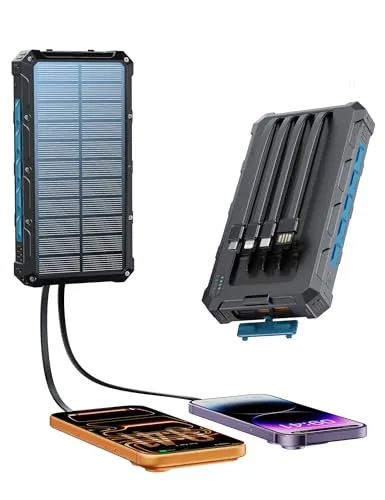 | Travel-Friendly Dynamo | Capacity: 20000mAh | Solar charging: Yes (solar panel) | Built-in cables / ports: Built-in cables (Micro USB, Type-C, Apple-compatible, USB-A) | VIEW LATEST PRICE | See Our Detailed Review |
| Solar Charger Power Bank 49800mAh with 4 Cables & USB-C Outputs | 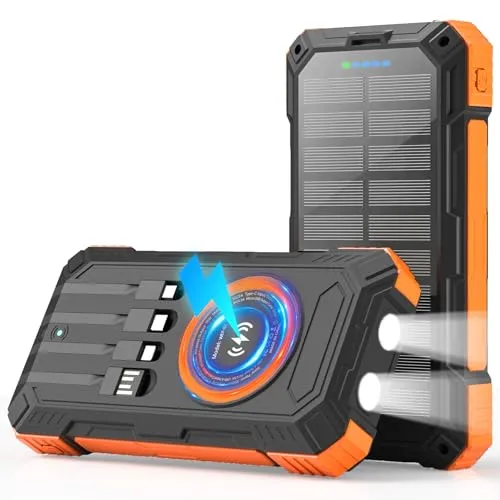 | All-Weather Power Hub | Capacity: 49800mAh | Solar charging: Yes (solar charging) | Built-in cables / ports: 4 outputs (USB-A, Type-C, Micro USB) plus wireless | VIEW LATEST PRICE | See Our Detailed Review |
| BLAVOR 10,000mAh Solar Charger Power Bank with USB-C | 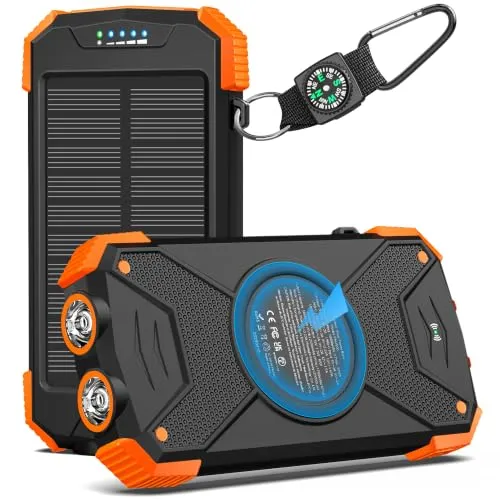 | Trusted Solar Champion | Capacity: 10000mAh | Solar charging: Yes (solar panel) | Built-in cables / ports: USB-C output; supports 3 devices simultaneously | VIEW LATEST PRICE | See Our Detailed Review |
| Solar Charger 20,000mAh Power Bank with Cables | Compact Power Pack | Capacity: 20000mAh | Solar charging: Yes (solar energy) | Built-in cables / ports: 4 cables (Type C, Lightning, Micro USB) + USB-A input | VIEW LATEST PRICE | See Our Detailed Review |
More Details on Our Top Picks
Solar Power Bank 49800mAh with 4 Cables 22.5W PD3.0
The Solar Power Bank 49800mAh with 4 Cables, 22.5W PD3.0 stands out for those needing a long-lasting, versatile charging option that doubles as a reliable travel companion. This device features 49800mAh capacity, wireless 15W fast charging, and PD3.0 up to 22.5W, capable of charging iPhone models and Galaxy phones quickly. It includes built-in cables: iOS, Type-C, Micro, plus a USB-A input. It supports IP65 protection, a rugged exterior, and an LED flashlight with three modes. Output includes wireless and USB-C/USB-A ports, while safety comes from an intelligent protection IC. A practical choice for travelers seeking dependable power.
- Capacity:49800mAh
- Solar charging:Yes (solar panel)
- Built-in cables / ports:Built-in cables (iOS, Type-C, Micro, USB-A input)
- Outputs / charging channels:3 output cables + wireless charging
- Water/dust protection:IP65
- Flashlight / emergency light:Ultra-bright LED flashlight (3 modes)
- Additional Feature:Ultra-dense design
- Additional Feature:IP65 rugged protection
- Additional Feature:Integrated LED flashlight
Solar Charger Power Bank 40000mAh with 4 Cables & Lights
This solar charger is ideal for outdoor explorers who need reliable power on the go, especially when access to outlets is limited. The Solar Charger Power Bank SOXONO L24S offers a 40000mAh capacity in a 6.77 x 3.46 x 1.42 inch body, weighing 1.17 pounds. It includes 4 built-in cables (Type-C, iOS, Micro USB) and three output ports (USB-C, USB-A, Micro) to charge up to five devices at once. A 20W PD fast charge powers devices quickly, and the IP67-rated design resists water and dust. Two flashlights run up to 30 hours, with a 1.8W solar panel for recharging.
- Capacity:40000mAh
- Solar charging:Yes (solar panel)
- Built-in cables / ports:Built-in cables (Type-C, iOS, Micro USB)
- Outputs / charging channels:3 output ports (USB-C, USB-A, Micro)
- Water/dust protection:IP67
- Flashlight / emergency light:2 flashlights (up to 30 hours)
- Additional Feature:IP67 waterproof/dust-proof
- Additional Feature:2 flashlights (dual)
- Additional Feature:1.8W solar panel
Hand Crank Solar Radio with Waterproof Bluetooth Speaker
A reliable emergency radio companion, this Hand Crank Solar Power Emergency Radio combines a waterproof Bluetooth speaker with NOAA weather updates and a built-in flashlight. It offers a 5000mAh rechargeable battery and multiple charging methods, including USB Type C, hand cranking, and solar power. The device functions as a portable AM/FM NOAA weather radio, with seven preset weather channels and an auto-scan feature for stations. It includes a SOS alarm and can charge phones via its battery. Constructed with IPX5 waterproofing and drop-resistant ABS, the 6.5 x 1.8 x 3 inch unit weighs about 0.96 pounds. It supports iOS and Android Bluetooth devices.
- Capacity:5000mAh
- Solar charging:Yes (hand crank + solar recharge)
- Built-in cables / ports:No built-in cables mentioned
- Outputs / charging channels:1 or more USB outputs for device charging (radio focused)
- Water/dust protection:IPX5
- Flashlight / emergency light:Flashlight (part of emergency radio)
- Additional Feature:NOAA weather radio
- Additional Feature:AM/FM auto scan
- Additional Feature:SOS alarm
ERRBBIC 49800mAh Solar Power Bank with USB-C Flashlight
ERRBBIC 49800mAh Solar Power Bank with USB-C, Flashlight stands out for users who need a high-capacity, all-in-one power solution. The ERRBBIC Solar Charger Power Bank offers 49,800mAh, with 22.5W wired and 15W wireless output, and built-in cables for Type-C, Lightning, Micro, and USB-A. It can charge up to six devices at once, with 15W wireless and 22.5W PD fast charging, plus dual input options for rapid recharging. It includes dual flashlights, a rugged ABS shell, and safety protections. Dimensions are 7 x 3.66 x 1.18 inches, weight about 0.56 kg, and a one-year warranty. Practical choice for emergencies.
- Capacity:49800mAh
- Solar charging:Yes (solar panel)
- Built-in cables / ports:Built-in cables (Type-C, Lightning, Micro, USB-A)
- Outputs / charging channels:3 outputs + wireless; 6 devices simultaneously
- Water/dust protection:UL2056/UN38.3/ISO9001; waterproof
- Flashlight / emergency light:LED Torch (3 modes)
- Additional Feature:22.5W wired PD
- Additional Feature:Dual flashlight
- Additional Feature:Auto power-off (30s)
BigBlue 28W Solar Panel Charger with Dual USBs
The BigBlue 28W Solar Panel Charger with Dual USBs stands out for outdoor users who need quick, on-the-go power, offering an ultra-portable panel charger that folds neatly for backpacks. It uses dual USB-C ports and one USB-A port, with a maximum output of 5V/4.8A for multi-device charging. The compact design folds to 11x6x1.4 inches and weighs 1.5 lbs, making it backpack-friendly. It claims 25.4% sunlight conversion efficiency and shadow-free surface tech for better power, though performance varies with light. IP44 weather resistance helps, but the USB junction box is not waterproof. It’s best in direct sun.
- Capacity:Not specified
- Solar charging:Yes (solar charging panel)
- Built-in cables / ports:Built-in USB cables (unspecified count)
- Outputs / charging channels:2 USB outputs (per panel spec)
- Water/dust protection:IP44
- Flashlight / emergency light:LED flashlight
- Additional Feature:Foldable, compact
- Additional Feature:25.4% efficiency
- Additional Feature:Dual USB-C + USB-A
Durecopow 20,000mAh Solar Power Bank with Cables
Durecopow’s 20,000mAh Solar Power Bank stands out for travelers who need a rugged multi-device charger with built-in cables. The charger has a 20,000mAh capacity and a solar panel, plus four built-in cables and three output ports with USB-C compatibility. It can charge up to six devices at once, using three cables (Type C, Lightning, Micro USB) and one USB-A input. Built with eco-friendly silicone rubber and ABS/PC, it offers drop, dust, and water resistance for outdoor use. It includes a dual LED flashlight and a carabiner, with a 12-month warranty and 1000+ recharge cycles.
- Capacity:20000mAh
- Solar charging:Yes (solar charging)
- Built-in cables / ports:4 built-in cables (Type C, Lightning, Micro USB, USB-A)
- Outputs / charging channels:3 ports (output); can charge up to 6 devices
- Water/dust protection:Waterproof design
- Flashlight / emergency light:LED flashlight (dual)
- Additional Feature:1000+ recharge cycles
- Additional Feature:Compass included
- Additional Feature:Five LED indicators
Solar Charger Power Bank 20000mAh with Built-in Cables
This Solar-Charger-Power-Bank 20,000mAh is a solid choice for travelers needing reliable power on the go, with built-in cables that reduce clutter. The device is a solar-powered battery charger with a 20,000mAh capacity and 20W fast charging. It includes four built-in cables: Micro USB, Type-C, Apple-compatible, and USB-A, each five inches long. It can charge phones to about 65% in 30 minutes, and supports a dual power source with a solar panel and USB-A input for recharging at home. Weighing 180 grams, it remains portable, TSA-friendly, and comes with a 1-year warranty.
- Capacity:20000mAh
- Solar charging:Yes (solar panel)
- Built-in cables / ports:Built-in cables (Micro USB, Type-C, Apple-compatible, USB-A)
- Outputs / charging channels:4 outputs (built-in cables) + charging
- Water/dust protection:TSA-friendly; implied outdoor use
- Flashlight / emergency light:LED flashlight (3 modes)
- Additional Feature:6 devices simultaneous
- Additional Feature:Smart auto charging
- Additional Feature:4 built-in cables
Solar Charger Power Bank 49800mAh with 4 Cables & USB-C Outputs
A solid choice for travelers who need dependable power in any weather, Solar Charger Power Bank 49800mAh acts as an all-weather power hub with multiple outputs. This wireless portable charger has a 49800mAh high-density lithium polymer battery and supports thousands of recharge cycles. It offers six outputs across USB-A, Type-C, and Micro-USB ports, plus wireless charging for compatible devices. It can be charged via outlet or solar panel, though sun is variable; USB charging is recommended before travel. Built-in intelligent protection guards against overcharge and short circuits, while ABS and PC materials provide IP65 durability. Includes a flashlight, compact design, and a two-year warranty.
- Capacity:49800mAh
- Solar charging:Yes (solar charging)
- Built-in cables / ports:4 outputs (USB-A, Type-C, Micro USB) plus wireless
- Outputs / charging channels:6 outputs total (3 ports) plus wireless
- Water/dust protection:IP65 waterproof
- Flashlight / emergency light:Built-in flashlight (3 modes)
- Additional Feature:6 outputs total
- Additional Feature:IP65 waterproof
- Additional Feature:Ultra-dense non-slip design
BLAVOR 10,000mAh Solar Charger Power Bank with USB-C
BLAVOR’s 10,000mAh Solar Charger Power Bank with USB-C stands out for outdoor reliability, featuring a 20W USB-C fast charger and a built-in solar panel for on-the-go charging. It is a portable wireless charger with dual flashlight, IPX5 waterproofing, and a compact size of 5.9 x 3.1 x 0.8 inches, weighing 9.3 ounces. The device supports charging three devices at once, including iPhone and iPad, with safer Lithium-cobalt battery tech offering more cycles. Real-rated capacity covers multiple charges for iPhone models and the iPad. Built to last, with flame-retardant materials and rugged design.
- Capacity:10000mAh
- Solar charging:Yes (solar panel)
- Built-in cables / ports:USB-C output; supports 3 devices simultaneously
- Outputs / charging channels:USB-C output (20W) + supports 3 devices simultaneously
- Water/dust protection:IPX5 waterproof
- Flashlight / emergency light:Dual flashlight
- Additional Feature:Real-rated capacity data
- Additional Feature:4.2+ star market presence
- Additional Feature:Flame-retardant outer case
Solar Charger 20,000mAh Power Bank with Cables
The Kepswin Solar Charger PS35K stands out for users who need a compact power pack with multiple built-in cables, allowing it to charge several devices at once. This 20,000mAh, 74Wh unit offers three built-in cables (Type C, Lightning, Micro USB) plus a USB-A input, enabling simultaneous charging of up to six devices. It can draw power from solar energy or a wall socket, and it weighs about 200 grams with dimensions roughly 5.9 by 3.1 by 0.78 inches. Built with ABS+PC, it is waterproof, dustproof, and shockproof, with a carabiner for easy attachment. Support is available 24/7.
- Capacity:20000mAh
- Solar charging:Yes (solar energy)
- Built-in cables / ports:4 cables (Type C, Lightning, Micro USB) + USB-A input
- Outputs / charging channels:4 built-in cables + 1 USB-A input
- Water/dust protection:Waterproof
- Flashlight / emergency light:Flashlight modes (Normal, SOS, Strobe)
- Additional Feature:Thickened anti-fall corners
- Additional Feature:Silicone port cover
- Additional Feature:Carabiner clip
Factors to Consider When Choosing Solar-Powered Phone Chargers
When choosing a solar-powered charger, buyers should look at Capacity in mAh to estimate how many phone charges it can provide, as well as Output Power to determine charging speed, with typical ranges from 5V/1A to 5V/3A. Solar Panel Efficiency matters for how well the panel converts sunlight into usable power, while Built-In Cables add convenience and reduce extra purchases, and Durability Standards help gauge long-term reliability. Overall, balancing capacity, speed, durability, and price will guide a practical, real-world choice that fits everyday use.
Capacity InmAh Essentials
Capacity in milliamp-hours (mAh) is a key metric for solar-powered phone chargers, indicating how much charge they can store and deliver to devices. Higher mAh ratings mean more power for charging devices multiple times, making this a practical starting point for choice. A 20,000mAh charger can generally charge most smartphones about 3-4 times, while those over 40,000mAh can power larger devices or multiple devices simultaneously. Fast charging capabilities can be influenced by the charger’s mAh, with higher capacities often supporting faster output rates, such as 20W or 22.5W. It’s crucial to evaluate your charging needs; for instance, a 10,000mAh model may fit short trips, while 40,000mAh or more suits extended adventures. Higher mAh often means more recharge cycles, too.
Output Power Details
Output power details are a key factor when choosing solar-powered phone chargers, since higher wattage generally shortens charging times and improves efficiency. In practice, many models offer fast charging from 15W to 22.5W, which helps devices recharge quickly. Chargers with 20W or more can cut charging time noticeably, often bringing a smartphone to about 65% in roughly 30 minutes. Several models provide multiple output ports, such as USB-A and USB-C, allowing simultaneous charging of several devices during outdoor activities. Compatibility with fast charging technologies like PD and QC can further boost efficiency for diverse devices. The charger’s total capacity, shown in mAh, influences how many charges are possible before a recharge is needed, with larger packs like 49,800mAh offering extended use.
Solar Panel Efficiency
Solar panel efficiency is a key factor for choosing solar-powered phone chargers. Efficiency is usually shown as a percentage, with high-efficiency panels exceeding 20% in favorable light. The efficiency a charger delivers depends on temperature, sun angle, and shading, and the best results come from direct sunlight. Advanced technologies, such as N-type solar cells, can boost performance in low light and reduce power loss when parts are shaded. When selecting a charger, consider the solar panel wattage; higher wattage often means faster charging but may add size and weight. Regular maintenance helps too, including keeping panels clean and free of debris, which can improve both efficiency and device longevity. Overall, balance efficiency with portability and use case.
Built-In Cables Value
Built-in cables add a clear convenience for solar-powered chargers, reducing the need to carry separate cords and making outdoor use easier. These cables come in USB-C, Lightning, and Micro USB types, allowing compatibility with many devices. A charger with built-in cables reduces clutter and helps users store the product in a pocket or bag without tangling cables. Durability is often improved, as the cables are designed to withstand bending and daily wear. Built-in cables can speed up charging, letting users connect devices immediately instead of hunting for cords. Some models include retractable or multi-headed cables, offering flexibility for different devices. Prices vary, typically ranging from about $20 to $60, depending on capacity and build quality. Practical choice favors portability and rapid readiness.
Durability Standards
Durability standards are a key factor when choosing solar-powered phone chargers. Look for an IP rating of at least IP67, signaling waterproof and dustproof performance in rugged outdoor use. Chargers built with ABS and PC materials offer better impact resistance and environmental durability. Verify compliance with UL2056 and UN38.3, which indicate adherence to battery safety and durability guidelines. Features like drop protection and shock resistance help withstand accidental falls during hikes or campsites. Consider operating temperature range; products should function from -20°C to 60°C for reliability in extreme weather. Check build quality, sealed ports, and cable inclusion for long-term use. While price matters, prioritize reputable durability specs to avoid frequent replacements. Practical choice balances protection, safety certifications, and real-world performance.
Safety Protections
Safety protections are a key part of choosing solar-powered phone chargers, and readers should look for clear safety features that prevent common problems. Chargers commonly include overcharge protection, stopping the charge when the device is full to avoid battery stress. Short circuit protection helps prevent overheating or fires if a fault occurs. Temperature control mechanisms keep operation within safe heat and cold ranges, protecting internal components. Some models use intelligent IC chips to monitor voltage and current in real time, boosting safety and efficiency. Waterproof and dustproof ratings, such as IP65 or IP67, add environmental protection for outdoor use. These features provide practical safety without complicating everyday charging, though buyers should confirm certification and test results before purchase.
Practical Charging Scenarios
When choosing solar-powered phone chargers for real-world use, buyers should consider how the charger performs in everyday scenarios like travel, camping, and emergencies. In practical terms, high capacity matters, with 20,000mAh or more allowing multiple device charges in a day. Fast charging speeds of 20W or 22.5W cut downtime, helpful for on-the-go users. Built-in cables and multiple output ports enable simultaneous charging for several devices during group trips or power outages. A durable, weather-resistant design, such as IP67 or IP65, is essential to endure rain, dust, and rough handling. Integrated features like LED flashlights with multiple modes add value during camping or outages. Overall, look for a balance of capacity, speed, versatility, and ruggedness to meet real-world needs.
Frequently Asked Questions
How Long Does a Full Solar Charge Take Outdoors?
A full solar charge outdoors depends on sun, panel size, and device battery. In bright midday sun, a 10-watt panel can add 5 to 10 percent per hour to a typical smartphone, while a 20-watt panel may deliver 10 to 20 percent per hour. Real-world times vary from 2 to 8 hours for a full recharge, often slower with clouds or shading. Expect 1–3 amps when connections are clean and panels are angled correctly.
Can Solar Banks Charge Laptops as Well as Phones?
Yes, some solar banks can charge laptops as well as phones, but compatibility varies by model. Look for USB-C PD or USB-A with fast-charge ports, and a built-in AC inverter for notebook charging. Power output matters: most phone-focused banks deliver 5–18W; laptop-capable units provide 45–100W. Expect 20–30V adapters, 60–120Wh batteries, and prices around $80–300. Check solar input, efficiency, and pass-through charging for ongoing use.
Are Built-In Cables Interchangeable With USB-C Only Devices?
Are built-in cables interchangeable with USB-C only devices? In most cases, built-in cables are fixed, not interchangeable, and design varies by model. Some solar banks include a USB-C port plus micro-USB or Lightning, while others use a single type-C or type-A output. If a device requires USB-C, verify the bank provides USB-C output and compatible Power Delivery, or use an adapter. Check cable length, durability, and price, typically $20–$60.
Do Solar Chargers Work in Cloudy or Indoor Light?
Solar chargers work best in direct sun, but they can function indoors with adequate light or on cloudy days, though charging is slower and less reliable. Indoor light from lamps or windows may keep devices from draining completely, yet expect longer fill times. Typical products include 5W to 20W panels, built-in batteriestorage, and USB outputs like USB-C. Prices range roughly from $20 to $80, depending on size, durability, and included cables. Users should confirm panel efficiency and real-world test results.
Is There a Risk of Overheating During Charging?
Yes, there is a risk of overheating during charging, especially if a charger sits in direct sun or uses inefficient regulation. Most good models include a built-in temperature sensor and a smart controller that reduces power when heat rises. Expect metal panels, lightweight plastics, and a 5–24V input with 1–3A output. Prices range roughly $20–80, depending on size, with 1–2 USB ports and a foldable design for portability. Always follow manufacturer instructions.




Power went out one afternoon while I was on my patio, so I set up the hand-crank solar radio and paired it to the waterproof speaker. The cranking was a little work, but the sound was clear enough to keep me relaxed.
i’m planning a month-long camping trip and I need something that won’t get damaged when it’s just thrown in my bag. Between the 49,800 mAh bank and the smaller 10,000 mAh USB‑C ones, which should I pick if I’m worried about rough handling and inconsistent sun?
If rough handling is your main worry, prioritize the ruggedness rating and port protection rather than capacity alone. In practice, the smaller 10,000 mAh USB‑C packs are often easier to keep secure (less bulk to smack around) but they’ll run out sooner if the sun is inconsistent. The 49,800 mAh bank gives you more “buffer” for cloudy or shaded periods, but only if it’s in a case/secured in your bag and you’re using the correct cables/ports. If your day will be partly shaded, I’d lean 49,800 mAh, then pack it with a simple pouch and keep the charging ports covered whenever possible.
I’m thinking of grabbing the 49,800 mAh one with 4 built-in cables, but I’m worried about whether it’ll actually keep up while I’m out all day (like at the beach or hiking where the sun shifts). Do you think the higher capacity makes a real difference vs the 40,000 mAh models with lights?
If you’re out all day near Plant City—beach or hiking with shifting sun—the higher 49,800 mAh capacity can help, but it won’t magically eliminate cloudy or low-angle periods. What matters most is whether the 49,800 mAh pack can consistently deliver the same USB-C/PD wattage you need (for example, 20–22.5W) when your phone starts dropping below ~50%. Extra capacity mainly gives you more “buffer” for multiple drain cycles and longer stretches between good sun. If the 40,000 mAh model matches the same real PD output, you may feel similar day-to-day performance; the bigger pack is most noticeable when you’re charging repeatedly and can’t rely on direct sun.
i bike to work and I’m trying to stop carrying a separate power bank. I don’t get constant direct sun, and my phone is usually at 20–30% by the time I head home. If I choose between a 20,000 mAh model with built-in cables and a bigger 49,800 mAh one, which one is more likely to actually keep my phone going on a normal sunny-but-not-beam-of-sun day?
Go with the 49,800 mAh option if your main goal is reliable real-world top-ups when the sun is inconsistent. A larger battery gives you more usable energy to “absorb” solar inefficiency and losses from charging (especially if your phone starts the ride at 20–30%). The 20,000 mAh units with built-in cables are convenient, but they can fall short if your panel isn’t hitting a steady output. If you’re in San Diego–style conditions (sunny, but not always direct on the panel), extra capacity usually buys you the most margin.
I’m often charging my phone plus either earbuds or a watch at the same time. Do any of the solar options here slow down the output or throttle when multiple devices are connected, and which one would you pick to avoid that?
I’d start by checking each model’s stated total output and whether it supports simultaneous charging without throttling. Many solar chargers do reduce wattage when multiple ports are used, especially when you’re near the rated limit, so look for a unit that clearly lists simultaneous USB-C + USB-A (or multiple ports) with the same or similar wattage per port. For your use in Chandler (phone + earbuds/watch at the same time), I’d pick the charger that advertises the highest total PD wattage for dual-device use, and then keep the phone on the PD/USB-C side while using the other port only if the combined draw stays within the charger’s total rating.
im leaning toward the 49,800 mAh option with 4 built-in cables, but Im worried it won’t actually charge my phone fast enough if Im mostly sitting under beach shade. How much should I expect the output to drop in indirect light?
If you’re under shade, you should expect a noticeable drop because solar chargers need direct sunlight to hit their rated wattage. With the 49,800 mAh/22.5W PD3.0 model, you may still see charging, but it’s more likely to run at a reduced effective wattage for long stretches, so top-up time can feel slower than the “spec” speed. Your best bet is to treat the sun ratings as best-case and use the bank’s capacity mainly as “extra stored energy.” If speed matters, also check whether your phone supports PD fast charging and keep the bank as exposed to light as you can (even partial clearing or shifting position helps). You may also find this helpful: 10 Best Voice-Controlled Smart Displays in 2026.
I’m choosing between that 49,800 mAh 4-cable PD model and a smaller USB‑C-only 10,000 mAh one. I mostly want to top up my phone during long beach days, but I hate carrying extra stuff. Which direction makes more sense if my phone tends to drop from like 30% to 15% by evening?
Go with the 49,800 mAh PD3.0 model if your goal is reliable evening top-ups during beach-long days. The 10,000 mAh packs can work for quick “patches,” but solar output is variable and you’ll lose more capacity to real-world inefficiencies (and whatever your phone uses while it’s still heating up/using GPS/camera). If the larger bank is bulky for you, choose the 10,000 mAh only when you’re okay with charging slowing down and you’re fine topping up multiple times. For your 30% to 15% scenario, capacity matters most.
I’m an avid hiker and I keep my phone on low battery mode all day. I also need something that can double as a flashlight for the trail at dusk—between this 49,800 mAh pick and the other models with lights, which one is actually the better emergency option?
If you want the most reliable emergency setup, prioritize the model that’s designed for daylight topping up plus an actually usable light. The 49,800 mAh option is great for capacity and multiple-device charging, but it’s mainly about power; it’s not typically the “light-first” choice. If a built-in flashlight is your priority, pick one of the models that explicitly includes a flashlight feature, even if it’s a bit smaller in capacity, because you’ll get both charging and a practical light in one. For dusk use, check the stated lumens/brightness (not just that it has a flashlight) and confirm it supports USB-C output for your phone.