
Here are six solid 4K monitors for 2026 you won’t regret getting: the Samsung 37” Odyssey G75F with a 37-inch 1000R curved panel, 165Hz, and 1ms response; the Dell S3225QS 31.5″ VA with 120Hz, 3840×2160, and solid color coverage; the Dell S2725QC 27″ with USB‑C, 120Hz, and ComfortView Plus; the ASUS ROG Swift PG32UCDM 32″ QD‑OLED at 240Hz; the Samsung UJ59 32″ FreeSync; and the Samsung ViewFinity S7 37″ HDR. Each balances productivity, gaming, and comfort, with plug‑ins, color accuracy, and value. More tips await.
| Samsung 37” Odyssey G7 4K Gaming Monitor (G75F) | 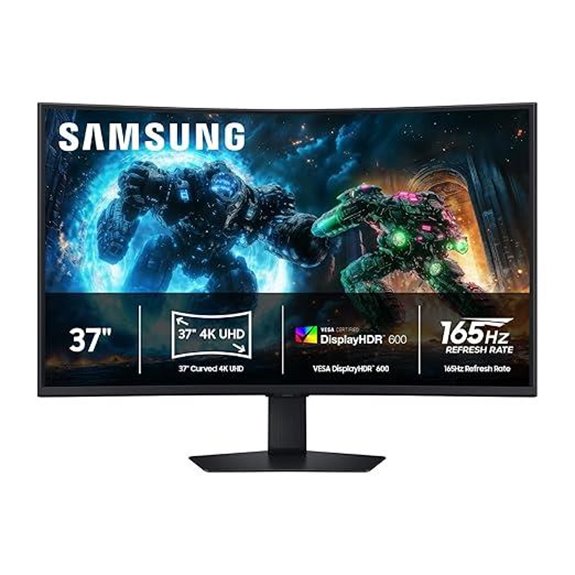 | Immersive Big Screen | Display Size: 37 inches | Resolution: 4K UHD | Gaming Refresh Rate: 165 Hz | VIEW LATEST PRICE | See Our Detailed Review |
| Dell 32 Plus 4K Monitor S3225QS 31.5″ 120Hz VA Ash White |  | All-Around Performer | Display Size: 31.5 inches | Resolution: 4K UHD | Gaming Refresh Rate: Up to 120 Hz | VIEW LATEST PRICE | See Our Detailed Review |
| Dell 27 Plus 4K USB-C Monitor S2725QC with AMD FreeSync | 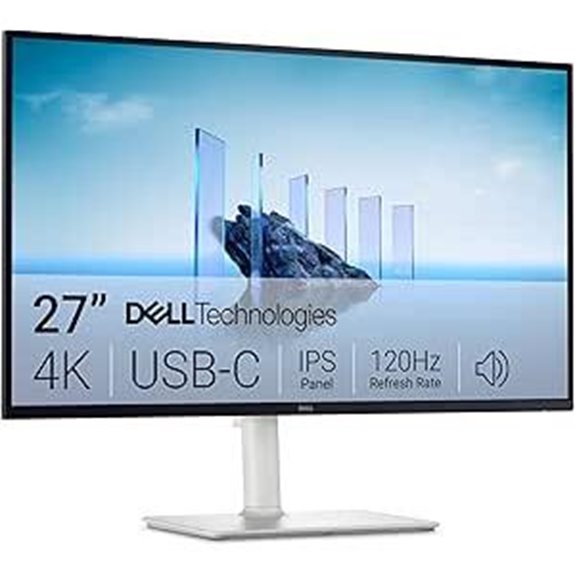 | Compact Productivity | Display Size: 27 inches | Resolution: 4K UHD | Gaming Refresh Rate: 120 Hz | VIEW LATEST PRICE | See Our Detailed Review |
| ASUS ROG Swift 32” 4K QD-OLED Monitor (PG32UCDM) | 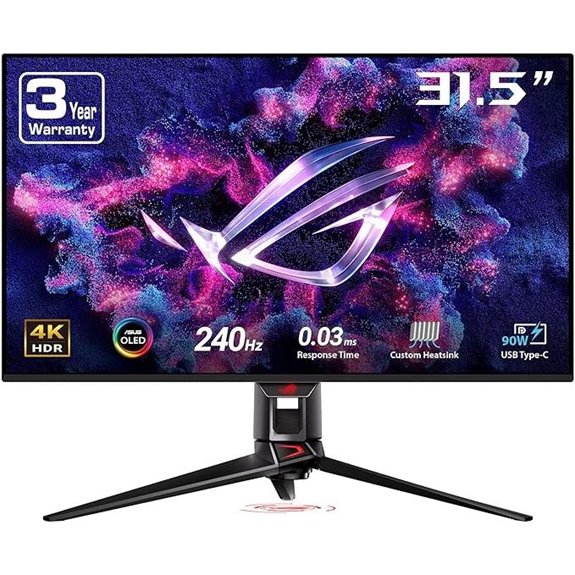 | Ultra-Responsive OLED | Display Size: 32 inches | Resolution: 4K UHD | Gaming Refresh Rate: 240 Hz | VIEW LATEST PRICE | See Our Detailed Review |
| Samsung 32″ UJ59 4K UHD Monitor with FreeSync |  | Entry-Level 4K | Display Size: 32 inches | Resolution: 4K UHD | Gaming Refresh Rate: 60 Hz (implied standard/was not specified as higher) | VIEW LATEST PRICE | See Our Detailed Review |
| Samsung ViewFinity S7 37″ 4K UHD HDR Monitor |  | Professional HDR Giant | Display Size: 37 inches | Resolution: 4K UHD | Gaming Refresh Rate: 60 Hz (implied standard/was not specified as higher) | VIEW LATEST PRICE | See Our Detailed Review |
More Details on Our Top Picks
Samsung 37” Odyssey G7 4K Gaming Monitor (G75F)
The Samsung 37” Odyssey G7 (G75F) stands out for gamers who want a large, immersive 4K screen with smooth motion, thanks to its 165Hz refresh rate and 1ms response time. We’re looking at a 37” 1000R curved display with VESA DisplayHDR 600 for better contrast, plus deeper blacks and brighter whites in dark scenes. It includes Auto Source Switch+ to detect devices and an ergonomic stand for tilt and height adjustments. CoreSync hauls 16.7 million colors, with CoreLighting+ boosting immersion. Connectivity covers AMD FreeSync Premium Pro, while the model LS37FG75DENXZA ships in 2025 for serious gaming.
- Display Size:37 inches
- Resolution:4K UHD
- Gaming Refresh Rate:165 Hz
- Panel Type:VA/curved gaming (LED LCD with 1000R curve)
- HDR/Color Capability:VESA DisplayHDR 600
- Connectivity/Ports:Multiple ports with Auto Source Switch+
- Additional Feature:Auto Source Switch+
- Additional Feature:CoreLighting+ projection
- Additional Feature:16.7M CoreSync colors
Dell 32 Plus 4K Monitor S3225QS 31.5″ 120Hz VA Ash White
Dell’s 32 Plus 4K Monitor S3225QS stands out for its 31.5″ VA panel delivering smooth 120Hz and a sharp 3840×2160 image, making it a solid pick for both productivity and light gaming. We see its 4K clarity, 16:9 frame, and 1500:1 contrast giving solid text and video. It covers 99% sRGB and 95% DCI-P3, so colors look accurate enough for work and media. ComfortView Plus reduces blue light, and FreeSync Premium helps with tearing-free scenes. At 19.33 pounds and ash white design, it fits desks well, with slim bezels. Overall, a capable, practical choice for multi-use setups.
- Display Size:31.5 inches
- Resolution:4K UHD
- Gaming Refresh Rate:Up to 120 Hz
- Panel Type:VA Panel
- HDR/Color Capability:HDR readiness
- Connectivity/Ports:Various ports; standard connectivity
- Additional Feature:ComfortView Plus
- Additional Feature:Ultra-fast response time
- Additional Feature:HDR Readiness
Dell 27 Plus 4K USB-C Monitor S2725QC with AMD FreeSync
We’ll start with a solid choice for 4K work and play: the Dell 27 Plus 4K USB-C Monitor S2725QC delivers native 3840×2160 resolution on a 27-inch panel, with a 120Hz refresh rate and AMD FreeSync Premium for smoother motion. It has a 1500:1 contrast ratio, 99% sRGB coverage, and built-in speakers. The monitor uses a single USB-C cable for video and up to 65W power delivery, keeping desks tidy. It weighs about 14.79 pounds and measures roughly 7.89 x 24.08 x 15.3 inches. ComfortView Plus reduces blue light, aiding long sessions at work or school. Overall, a practical, versatile pick.
- Display Size:27 inches
- Resolution:4K UHD
- Gaming Refresh Rate:120 Hz
- Panel Type:IPS (implied 4K IPS)
- HDR/Color Capability:HDR readiness
- Connectivity/Ports:USB-C with up to 65W PD
- Additional Feature:USB-C single cable
- Additional Feature:65W power delivery
- Additional Feature:In-plane switching (IPS) color
ASUS ROG Swift 32” 4K QD-OLED Monitor (PG32UCDM)
ASUS ROG Swift 32” 4K QD-OLED Monitor (PG32UCDM) stands out for gamers who want near-instant response with stunning color accuracy. We’ll look at its 32-inch QD-OLED panel with UHD 3840 x 2160 resolution, a 240 Hz refresh rate, and 0.03 ms GTG response time, plus G-SYNC compatibility. It uses a custom heatsink, advanced airflow, and graphene film to reduce burn-in risk, with VESA DisplayHDR 400 True Black and 99% DCI-P3, true 10-bit color, Delta E under 2. The display offers optional uniform brightness, a DisplayWidget Center, and a 3-month Adobe Creative Cloud gift. Dimensions run 21 x 38 x 49 inches, weight 19.4 pounds.
- Display Size:32 inches
- Resolution:4K UHD
- Gaming Refresh Rate:240 Hz
- Panel Type:OLED (QD-OLED)
- HDR/Color Capability:DisplayHDR 400 True Black
- Connectivity/Ports:Multiple inputs; DisplayWidget Center
- Additional Feature:3-month Adobe Creative Cloud
- Additional Feature:Graphene burn-in reduction
- Additional Feature:OLED care functions
Samsung 32″ UJ59 4K UHD Monitor with FreeSync
The Samsung 32″ UJ59 with FreeSync is a solid pick for anyone who wants a 4K monitor that emphasizes practical multitasking and smooth gaming without breaking the bank. We look at its WIDESCREEN UHD display, which gives 4x pixels of Full HD and more space for documents, web pages, and multimedia. It supports a billion color shades for vivid images, and upscaling tech brings SD and HD content closer to UHD. For gaming, FreeSync reduces tearing, while Low Input Lag Mode helps with responsiveness. It also offers PBP and PIP for easy multitasking, with slim bezels and a Y-shaped stand.
- Display Size:32 inches
- Resolution:4K UHD
- Gaming Refresh Rate:60 Hz (implied standard/was not specified as higher)
- Panel Type:LED LCD (UHD)
- HDR/Color Capability:UHD with wide color/Shade up to billion colors
- Connectivity/Ports:Multiple inputs; PBP/PIP
- Additional Feature:Picture-by-Picture (PBP)
- Additional Feature:Picture-in-Picture (PIP)
- Additional Feature:Eye Saver/Flicker Free
Samsung ViewFinity S7 37″ 4K UHD HDR Monitor
The Samsung ViewFinity S7 37″ 4K UHD HDR Monitor is a strong choice for professionals who want a spacious, high-detail display without sacrificing color fidelity. We’ll note its 4K UHD 3840×2160 resolution, 37-inch screen, and HDR10 with 1.07 billion colors for rich images. It offers higher pixel density and an expanded workspace compared to smaller monitors, plus HDR for darker darks and brighter brights. Connectivity includes HDMI and DP, with an Easy Setup Stand for tool-free assembly. The design uses over 14% recycled plastic, and packaging avoids staples. Warranty and returns are available through Amazon and manufacturer support upon request.
- Display Size:37 inches
- Resolution:4K UHD
- Gaming Refresh Rate:60 Hz (implied standard/was not specified as higher)
- Panel Type:LED LCD (4K HDR)
- HDR/Color Capability:HDR10
- Connectivity/Ports:HDMI and DP (multiple ports)
- Additional Feature:TÜV intelligent eye care
- Additional Feature:5-inch larger vs 32”
- Additional Feature:Environmentally conscious materials
Factors to Consider When Choosing 4K Monitor
When you pick a 4K monitor, consider Resolution and Size, panel tech type, and how a higher refresh rate will affect smoothness for tasks you do most. You’ll want solid color accuracy for photo work, reliable ergonomics for long sessions, and enough connectivity options (HDMI, USB-C, and extra USB ports) to fit your gear, plus a price that fits your budget. Keep practical use in mind, balancing size, panel type, and features like viewing angles and calibration tools to match how you work and play.
Resolution and Size
A 4K monitor delivers 3840 x 2160 pixels, which means you get four times the detail of a Full HD screen and crisper text, images, and videos. When you pick a size, consider larger displays like 32 inches and above to fully appreciate the resolution and boost viewing comfort. A bigger screen adds more usable space for multitasking, letting you view multiple apps side by side without crowding. The aspect ratio, typically 16:9 for 4K, affects how content fills the screen, so choose a size that fits gaming or work needs. Higher pixel density in larger panels reduces visible pixelation, improving text sharpness and image clarity, which helps with graphic design or detailed visuals. We’ll weigh practicality and budget together.
Panel Tech Type
Panel tech type matters because it directly affects how you see colors, contrast, and motion. For 4K monitors, the main options are IPS, VA, and OLED, each with strengths you’ll notice in daily use. IPS panels give you precise color reproduction and wide viewing angles, which helps with design work and multiple screens side by side. VA panels offer deep blacks and strong contrast, great for movie nights and dark gaming rooms. OLED delivers vibrant color depth, fast response, and true blacks, but you should watch for burn-in over time on static images. Your choice influences gaming feel, color accuracy, and professional work. Consider room lighting, budget, and how long you’ll view the screen each day.
Refresh Rate
For 4K monitors, the refresh rate tells you how many times the image updates each second, and higher rates make motion look smoother. The refresh rate, measured in Hz, affects gaming and video playback, with 60Hz, 120Hz, and 165Hz as common options. A refresh rate of 120Hz or above is notably better for competitive gaming, reducing motion blur and easing responsiveness. Monitors at 240Hz offer ultra-smooth motion, which helps in high-speed games and fast action sequences. Pair a higher refresh rate with a capable graphics card, because weaker GPUs may cap performance. Consider your needs and budget, as higher rates can raise price, typically adding features like adaptive sync and faster response times for a better overall experience.
Color Accuracy
Color accuracy matters for tasks like graphic design, photography, and video editing, so you’ll want a monitor that reproduces colors as true to life as possible. Color accuracy is critical when precision matters, and even small differences can affect the final result. Look for higher color gamut coverage, like 99% sRGB or 95% DCI-P3, to reproduce more colors and create vibrant, lifelike images. True 10-bit color depth helps with smoother gradients by offering about 1.07 billion shades, reducing banding in most scenes. Calibration tools with Delta E values under 2 keep colors consistent, which is essential for professional work. HDR enhances contrast and brightness, aiding color differentiation in dark and bright areas. Consider built‑in calibration, reviews, and price to balance accuracy with value.
Ergonomics and Connectivity
Ergonomics and connectivity matter, because a comfortable, easily connected setup keeps you productive longer without strain. You’ll want adjustable stands for height and tilt to reduce neck and eye strain during long sessions. Multiple HDMI, DisplayPort, and USB-C ports make switching devices simple and keep your desk tidy. Monitors with built-in eye care technologies, like TÜV-certified modes, help minimize blue light and flicker for better visual health. Size and aspect ratio matter: larger displays improve multitasking and immersion while staying at a good ergonomic distance. Look for Auto Source Switch to detect connected devices automatically, which streamlines input changes. Prioritize these features alongside price and warranty to balance comfort, efficiency, and value.
Frequently Asked Questions
How to Choose 4K Refresh Rate Best for Gaming vs. Work?
You should aim for a 60–160 Hz refresh rate for gaming and 60 Hz for work, but higher helps both tasks. For gaming, prioritize 120 Hz or 144 Hz with adaptive sync (G-SYNC/FreeSync) and a low input lag under 10 ms. For work, 60–75 Hz suffices, but 120 Hz helps scrolling. Look for IPS panels for color accuracy, 4K resolution, 1–2 ms response, and HDMI 2.1 or DisplayPort 1.4. Expect prices around $400–$800.
Do OLED 4K Monitors Have Burn-In Risk Long-Term?
OLED 4K monitors do have a burn-in risk, but it’s low with normal use. You’ll mainly see it if static UI, logos, or HUDs stay on for long periods. Modern panels include pixel shift, automatic brightness limits, and burn-in protection to reduce risk. For work and gaming, expect 0.5–1.5 hours of use per static image daily, and choose models with Ultra HD 120 Hz, HDR, and good glare handling to minimize issues. Consider rotating tasks and timers.
Is HDMI 2.1 Essential for 4K 120HZ Gaming?
Yes, HDMI 2.1 is essential for true 4K at 120 Hz gaming on most current consoles and GPUs. It supports 4K at 120 Hz with full 4:4:4 color, variable refresh rate, and low latency. If you don’t have HDMI 2.1, you’ll likely cap at 4K60 or struggle with features like VRR. Look for RTX 4090/4080, RX 7900 XTX, or modern consoles with an HDMI 2.1 port, and budget around $200–$500 for cables and adapters.
Are USB-C Docks Universal for All 4K Monitors?
USB-C docks aren’t universal for all 4K monitors. Some monitors support USB-C with power delivery and video (USB-C Alt Mode), others only offer basic USB-C downstream data. Check for DisplayPort Alt Mode or HDMI over USB-C, PD power (65W–100W), and USB-A hub if needed. Budget about $50–$200 for a solid dock. If you game or edit, prioritize 4K60, decent refresh, and reliable drivers. Read reviews to confirm compatibility with your specific monitor.
Which 4K Monitor Offers the Best HDR Experience?
The LG UltraFine OLED Pro 32EP950 offers the best HDR experience, with 1,000 nits peak, deep OLED blacks, and 100% DCI-P3 coverage. It handles HDR10 and Dolby Vision well, and you’ll notice richer contrast in games and movies. Expect accurate color out of the box, a 31.5-inch 4K panel, and HDMI 2.1 support for newer consoles. It costs about $3,999, so it’s premium, but you get top-tier HDR performance. Consider it if HDR quality matters most.
Wrapping It Up
If you want a solid 4K monitor lineup, this list covers big sizes, fast 120Hz panels, and versatile inputs. From the 37” Odyssey G75F and ViewFinity S7 to the 32” ASUS and Dell options, you get varied VA, OLED, and USB-C setups. Consider size, panel type, and refresh rate for gaming or work. Prices differ, so match features to your budget. In short, pick the model that best fits your screen size, connection needs, and daily use.


I’m trying to keep it simple: I want one 4K monitor that works great for both work and PS5, and I don’t want to juggle tons of cables. From your list, which option is the most “plug in and go” setup?
From the list, the Dell S2725QC is the most “plug in and go” for a simple mixed work + PS5 setup. It’s easy to connect and minimize cable juggling because it supports USB-C for work devices, so you can often run both video and power through a single cable to your laptop. For PS5, you just use the monitor’s HDMI input, and you’re ready to play without extra adapters or special switching. If your setup changes between laptop and PS5 often, the S2725QC keeps it the smoothest.
What should I ask first so I do not waste time going in the wrong direction?
Ask this first: “What will I use the monitor for, and what’s the exact device I’m connecting to?” Get the answers to your input/output needs (HDMI vs DisplayPort vs USB-C), your refresh rate target (60Hz vs 120–165Hz), and the resolution you actually want to drive at 4K. If you’re gaming on a PC, confirm your GPU can sustain 4K at your desired FPS. If you’re using a laptop in Atlanta for work, confirm it supports USB-C video and power delivery. Then you’ll know which specs and ports to prioritize before shopping.
I’m in Redmond and trying to plan this around work. What should I prepare before calling someone about 6 4k monitors for you won?
Before you call about 6 4K monitors, jot down what you’ll connect (desktop, laptop, any console) and which ports you actually use (HDMI, DisplayPort, or USB‑C with video). Include your target performance—true 4K at 60Hz for work, or 120–165Hz if you need faster refresh—and whether you want flat or curved. Also note your desk space: your monitor size range (27–32 vs 37”), whether you need height/tilt, and if you might use VESA instead of the included stand. Finally, measure your cable reach and current mounting/monitor arrangement.
I’m torn between the ASUS ROG Swift PG32UCDM (QD-OLED 240Hz) and the Samsung 37-inch curved option. If I do both productivity and some high-refresh gaming, which one is more forgiving on text and UI comfort day-to-day?
For day-to-day text and UI comfort, the ASUS ROG Swift PG32UCDM is usually the more forgiving choice. On QD-OLED, text edges tend to look crisp at typical Windows/UI scaling, and the 240Hz panel helps make fast cursor movement and game motion feel smoother with less perceived stutter. The Samsung 37-inch curved option is immersive, but the much larger screen and curvature can make it easier for UI elements to feel “off” if your apps aren’t scaled perfectly, and you may notice more eye strain from brightness/room glare over long sessions. If you’re switching between productivity and high-refresh gaming often, ASUS is the safer bet.
I’ve got a PS5 plus a Windows laptop, and I keep bouncing between games and spreadsheets. Which monitor from your list would be the easiest to live with for both—especially for connecting everything without headaches?
For your PS5 plus a Windows laptop, the Dell S2725QC is the easiest to live with from the list, mainly because it can connect your laptop via USB-C. That gives you a one-cable setup for video (and often power), which makes switching back and forth with fewer headaches. For the PS5, you’ll use HDMI, but the day-to-day experience is still smoother than relying on multiple inputs each time. The 27-inch size is a solid balance for spreadsheets and gaming without feeling too cramped or too large for desk use in Williamsburg.
I’m torn between the Dell S3225QS and the ASUS PG32UCDM—mostly gaming but I also do long spreadsheet sessions. Would VA vs QD-OLED hurt text clarity or cause noticeable color shifts when I’m moving windows around?
For long spreadsheet sessions, the biggest difference will be viewing-angle behavior and how “static” bright areas feel. The Dell S3225QS (VA) is generally very readable head-on, but if you move windows around while viewing slightly off-center or in darker spreadsheet areas, you can notice mild contrast/color shift. The ASUS PG32UCDM (QD-OLED) stays consistently sharp for text and looks great even with small angle changes, with less shift as you move the window. Color can look a bit more dynamic on OLED, but the tradeoff is brightness management for long static content to reduce burn-in risk over time.
I’m mostly using a monitor for Adobe apps and a bit of gaming, but I’m worried about colors looking “off.” Between the Dell S3225QS VA and the Samsung ViewFinity S7 37” HDR, which would you pick for more accurate, consistent visuals
If you want Adobe colors to look consistently right, I’d pick the Dell S3225QS over the Samsung ViewFinity S7 37″ HDR. VA panels like the Dell tend to deliver a more predictable color “feel” for editing when you’re sitting straight in front, and Adobe workflows are usually more about accurate, stable tones than aggressive HDR presentation. The Samsung can be great for HDR viewing, but its 37-inch HDR approach is more likely to create noticeable visual differences depending on brightness/HDR behavior and viewing conditions. If you can, still calibrate both for best results.
I’m deciding between the Dell S3225QS (31.5″ VA) and the Samsung UJ59 (32″ FreeSync). If I mostly do office work but want smooth console gaming sometimes, which one is the safer pick for fewer headaches with settings and motion?
For fewer headaches with mixed office work and occasional console gaming, the Dell S3225QS is the safer pick. Its 31.5″ VA panel and 120Hz refresh make it straightforward to hit a smooth feel even when a console is running below its max FPS, and it generally stays consistent with productivity-oriented settings. The Samsung UJ59’s FreeSync support can be great when tuned well, but it’s more likely you’ll need extra adjustments to get motion looking right. If you want the easiest “set it and just enjoy it” experience, go with the Dell S3225QS.
I’m trying to run a 4K monitor with my older PC that only has HDMI 2.0 ports, and I keep reading conflicting stuff about whether true 4K will still run at 120Hz/165Hz. From your list, which monitor is the safest bet for full 4K without weird downscaling or black-screen issues?
For a PC with only HDMI 2.0, the safest bet from that list for stable “true 4K” without odd downscaling or black-screen issues is the Dell S3225QS (31.5″ VA, 4K at 120Hz). HDMI 2.0 can handle 4K at 120Hz reliably on many setups, while the higher refresh models like the Samsung 37” Odyssey G75F (165Hz) are more likely to drop to lower refresh rates or require DisplayPort/other bandwidth to stay stable. The Dell S2725QC (USB-C) is great, but it’s mainly the HDMI/DP bandwidth that determines the 120Hz behavior.
I’m upgrading to one of these 4K picks for both gaming and work, but I also want to avoid eye strain. Between the Samsung 37” Odyssey G75F and the Dell S2725QC, which one is more comfortable for long sessions if I use Windows at 125%/150% scaling?
For long work sessions with Windows 125%/150% scaling, the Dell S2725QC is typically the more comfortable choice between these two. The 27-inch 4K layout keeps text and UI elements feeling crisp without making your eyes work harder, and Dell’s ComfortView Plus helps reduce the perceived harshness of bright screens during extended reading and spreadsheet use. The Samsung 37” Odyssey G75F is excellent for gaming and immersion with its big 165Hz curved panel, but for office-style tasks it usually demands more careful desk distance and scaling so text doesn’t feel overly “large” or visually demanding. In practice, many people find the Dell easier for all-day mixed use.
I’m using a 4K laptop dock and I don’t want to mess with scaling all the time. Between the Samsung 37” curved (G75F) and the ASUS PG32UCDM, which one is more likely to keep text looking sharp if I’m bouncing between Windows apps and a game?
Between those two, the ASUS ROG Swift PG32UCDM is more likely to keep Windows text and UI looking sharp while you bounce between apps and a game via a 4K laptop dock. Its 32-inch size generally makes scaling changes feel less disruptive, and it’s designed to stay crisp at common Windows scaling levels. The Samsung 37” Odyssey G75F can look impressive for immersion, but the larger 37-inch panel tends to make any dock/resolution or refresh-mode switching more noticeable, especially with mixed workloads. Whatever you choose, lock the dock to a consistent 3840×2160 mode in Windows to avoid text shifts.
I do daytime office work and only watch HDR movies/YouTube occasionally. Between the ASUS ROG Swift PG32UCDM (QD-OLED) and the Samsung ViewFinity S7, is HDR actually noticeable day-to-day or am I paying extra I won’t use
If you’re doing daytime office work and only watching HDR movies/YouTube occasionally, HDR may be noticeably better but only in the moments you’re actually watching dark scenes or high-contrast content. The QD-OLED ASUS ROG Swift PG32UCDM usually delivers that “wow” more reliably because OLED contrast is essentially instant and highlights pop harder. The Samsung ViewFinity S7 will still look impressive, especially with bright rooms and everyday tasks, but you’re less likely to feel a day-to-day HDR upgrade for productivity-focused use. If you’re often in bright Tulsa office lighting, you’ll likely pay extra more than you benefit.
If I’m mostly gaming on a PC (switching between shooters and single-player) but I also want to do some spreadsheets later, which of your 4K picks handles motion better without making the text look weird? I’m trying to avoid eye fatigue after long sessions.
For your mix of fast PC gaming and later spreadsheets, the ASUS ROG Swift PG32UCDM is the best balance on this list. Its QD‑OLED panel handles motion cleanly, which helps with shooters, and OLED motion typically stays crisp without the heavy trailing you can see on slower VA/IPS options. For spreadsheets, set Windows text scaling to 100% (or the monitor’s recommended 4K scaling) and keep the desktop at the monitor’s native 3840×2160 resolution to avoid “weird” text. Also turn on any monitor text clarity/anti-flicker options in the OSD for less eye fatigue during long sessions.
Around Marietta, i’m coming from a 1080p monitor and I edit lots of spreadsheets + basic photo touch-ups. I’m worried a big 37-inch curved screen like the Samsung G75F will feel too “wide” and distort text at my viewing distance. Would you steer me toward the 27-inch Dell S2725QC instead?
If you’re editing lots of spreadsheets and doing basic photo touch-ups in Marietta, I’d usually steer you toward the 27-inch Dell S2725QC over a 37-inch curved like the Samsung G75F. From a typical desk distance, the 37-inch width can make spreadsheets feel hard to scan across, and ultra-wide curvature can be distracting for long text sessions. The 27-inch 4K size hits a comfortable “sharp text” sweet spot without requiring a super-specific seating distance. If you expect heavy multi-window work, the Dell’s USB-C setup can also make switching laptops easier.
I’m editing photos and making video thumbnails, but I’m not doing pro print. Among your 4K picks, which one is closest to “good enough” color so I don’t chase calibration forever, and how do I keep it consistent day to day?
For photo editing and thumbnails without pursuing pro print, the Dell S2725QC is the closest “good enough” choice among the 4K picks. Its USB‑C setup and Dell’s ComfortView Plus help keep colors looking consistent in everyday mixed lighting, so you’re less likely to chase adjustments endlessly. To keep it consistent day to day in your Grapevine workspace, pick one fixed Picture Mode (not Auto/Dynamic), lock brightness to your room conditions, and avoid changing contrast/sharpness between sessions. If you ever do adjust settings, do an OSD reset first so you’re back to a known baseline.
i bounce between an AMD desktop for gaming and an Xbox sometimes. Which of your 4K picks actually stays reliable with VRR so I don’t get weird flicker when the refresh rate changes
The ASUS ROG Swift PG32UCDM is the most reliable of our picks for avoiding flicker when your AMD desktop and Xbox change refresh rates, because it’s designed around VRR with HDMI support (so your Xbox can use VRR directly). For best results, use DisplayPort from your AMD desktop and HDMI from your Xbox, and turn on VRR on both devices. On the Xbox, set video output to 4K and enable the highest VRR-capable mode it offers. If flicker still shows up, try lowering the Xbox VRR range by selecting the next VRR mode and re-test.
I’m shopping for a 4K monitor mainly for office work, but I also want to play some games on weekends. Which one from your list is the best “text first” pick if I sit close for hours, and why not the others?
For a “text first” office pick, the Dell S2725QC (27”) is the best fit if you’ll sit close for hours. The 27-inch 4K resolution gives you sharper, more readable text without needing to scale as aggressively, and the USB‑C connection usually makes it easier to run a clean desk setup. The Dell S3225QS is great, but 31.5 inches can feel large up close, and the Samsung curved panel is more about immersion than crisp text geometry. The bigger ASUS and the ultrawide-style Samsung choices can also increase strain for long, desk-based reading. For gaming on weekends, all are capable, but the S2725QC balances clarity and comfort best.
I’m mostly on PC, but sometimes I game on my PS5. Between the Dell S2725QC and your Samsung UJ59, do I actually need AMD FreeSync, or will the console experience be basically the same?
You don’t have to have AMD FreeSync for PS5 gaming to feel good. FreeSync is mainly for PC, but what matters on PS5 is whether the monitor supports PS5 VRR through the monitor’s “VRR” / “Adaptive-Sync” support (and whether it works properly when the PS5 is set to VRR). If the Dell S2725QC and your Samsung UJ59 both provide standard VRR/Adaptive-Sync support that the PS5 recognizes, the console experience will be about the same smoothness-wise. If one only mentions FreeSync without PS5 VRR support, that one won’t deliver the same benefit on PS5. Check the specs/manual for PS5 VRR/Adaptive-Sync compatibility.
I’m on Windows and I use a 32-inch 4K monitor for both spreadsheets and gaming. If I’m not careful with scaling, the text can look a bit soft. Which one of your 4K picks is most forgiving for clarity on Windows without me tweaking everything every day?
On Windows, the most forgiving pick from the list for keeping text crisp with minimal scaling hassle is the Dell S2725QC (27-inch 4K with USB-C). At 27 inches, 4K typically lands closer to “comfortable default” Windows scaling, so you’re less likely to get that slightly soft or blurry UI look that can happen on larger 4K panels. It’s also easy to run at a consistent scaling value (commonly around 150% or 175%) and the built-in display clarity tends to hold up well for spreadsheets and general desktop work. For gaming, you’ll still have plenty of sharpness without daily tweaking.
I’m trying to set up a dual-monitor arm, and I’m worried a 37-inch curved option like the Samsung Odyssey G75F is going to be too wide/overshoot my desk. Would you steer me toward the smaller 31.5″ Dell or the 32″ QD-OLED instead?
For a dual-monitor arm, I’d steer you away from the 37-inch curved Samsung if overshoot/fit is your main concern. Even if the panel is “just” 37 inches, the 1000R curvature and extra physical width can push the effective footprint outward and make clearance against the arm joints, desk edge, or your seated position tighter. If you can choose between the 31.5-inch Dell S3225QS and the 32-inch QD-OLED, both are typically much easier to fit on most desks. I’d pick the Dell for the most straightforward compatibility and comfortable spacing; pick the 32-inch QD-OLED if you want the upgrade in image/response and your desk depth can support the larger 32-inch presence.
I’m buying one 4K monitor mostly for work (Word/Excel, lots of scrolling) but I’ll hook up a PS5 sometimes. I’m worried an OLED like the ASUS PG32UCDM will cause permanent burn-in with static stuff like toolbars—does that worry actually matter, or should I stay with the Dell VA?
For Word/Excel with lots of scrolling, OLED burn-in is the one real downside to consider—but with modern OLED monitors (like the PG32UCDM), it’s much less of a “permanent doom” risk than it used to be, as long as you use typical protections. If you keep toolbars/sidebars on the same spot for hours every day, use auto-dimming/brightness limits and enable pixel-shift/screen-saver features if the monitor has them, and avoid max-bright static scenes for long stretches. A VA like the Dell is the safer “no burn-in” choice, but you’ll likely trade off motion/contrast characteristics. If you want the OLED, use it like a normal display and you should be fine.
I’m leaning toward the Samsung 37” Odyssey G75F because the curved 1000R sounds awesome, but I’m worried about using it at a desk that’s not super deep. Realistically, how far back should I sit from a 37-inch curved 4K like that to avoid eye strain and distortion?
For a 37-inch 1000R curved 4K, you’ll usually want to sit far enough back that the curve feels like “wraparound,” not like it’s bending your view. If your desk isn’t super deep, a realistic starting point is about 30–36 inches (75–90 cm) from your eyes to the screen. If you can stretch closer to 36–42 inches (90–107 cm), it typically looks and feels steadier for long sessions. Also aim for the top of the active display to be at or slightly below eye level, and use Windows scaling (125–150%) so you’re not leaning forward to read.
I’m planning to switch between a MacBook and a PS5, and I need to make sure I’m not stuck with washed-out colors or weird brightness. From your list, which monitor is most likely to behave consistently across devices?
For consistent color and brightness when switching between a MacBook and a PS5, the Dell S2725QC is the safest pick from that list. It’s built to handle common laptop inputs cleanly (especially if you use USB-C on your MacBook), and it also supports reliable console-style picture settings without the “washed out” look you can get when the monitor’s HDR/contrast or color profile doesn’t match the source. Once you set it up, keep the same input and use the monitor’s standard/sRGB or game/console mode for the PS5 so both devices stay visually stable.